Make History. Create Change.

National student-built
movement of Civil Rights history in all 50 states

High school students in Civil Rights America research landmarks and events in their own communities -- and share the stories with their school and on a mobile app.
AK
ME
VT
NH
WA
ID
MT
ND
MN
WI
MI
NY
MA
RI
OR
NV
WY
SD
IA
IL
IN
OH
PA
NJ
CT
CA
UT
CO
NE
MO
KY
WV
VA
MD
DE
AZ
NM
KS
AR
TN
NC
SC
DC
HI
OK
LA
MS
AL
GA
TX
FL
Logan Dorton

Logan Dorton

Founder & Director · Senior, Landon School · Bethesda, MD

The idea

“I wanted to give students the chance to learn about Civil Rights History happening in their backyard. So I created a student-led movement to research and record history across the country.”

Growing up near Washington, DC, I realized something: even in a city with as much history as DC, a lot of students didn't know the civil rights history in our own area. So much important history is out there that people never learn, simply because no one has collected it or shared it in a way students can connect with. I founded Civil Rights History America to bring high schoolers across the country together to research the civil rights events, movements, and stories of their own cities and states, and build a fully student-run civil rights archive across America.

The students behind it

Led by state chapter presidents in all 50 states.

Every story on this site was researched and recorded by a high school student in their own community. These are the students leading it.

56 presidents
50 states
213 stories published
Show all presidentsSee every president →
Click a name to meet the president and hear their story.
50 states - 50 chapters - 100+ Stories

Student research, place by place.

Every entry is researched and written by a high school student.

All stories
Anti-Asian violence and immigrant rights
Black Power movement & community organizing
Black self-government & voting rights
Chicano civil rights
Civil rights education & organizing
Disability rights
Farm workers' rights
First Amendment rights
Free speech
Healthcare segregation
Housing discrimination
Immigrant rights
Indigenous land & water rights
Indigenous rights
Indigenous rights & religious freedom
Japanese American incarceration
Japanese American incarceration & military service
Judicial civil rights enforcement
Labor
Language rights & religious freedom
LGBTQ+ rights
Marches & sit-ins
Native American rights
Public accommodations desegregation
Racial discrimination & forced displacement
Racial violence & lynching
Racial violence & urban unrest
School desegregation
Slavery & abolition
Underground Railroad & abolition
Voting rights
Welfare rights & economic justice
Women's rights
Women's suffrage
Workers' rights

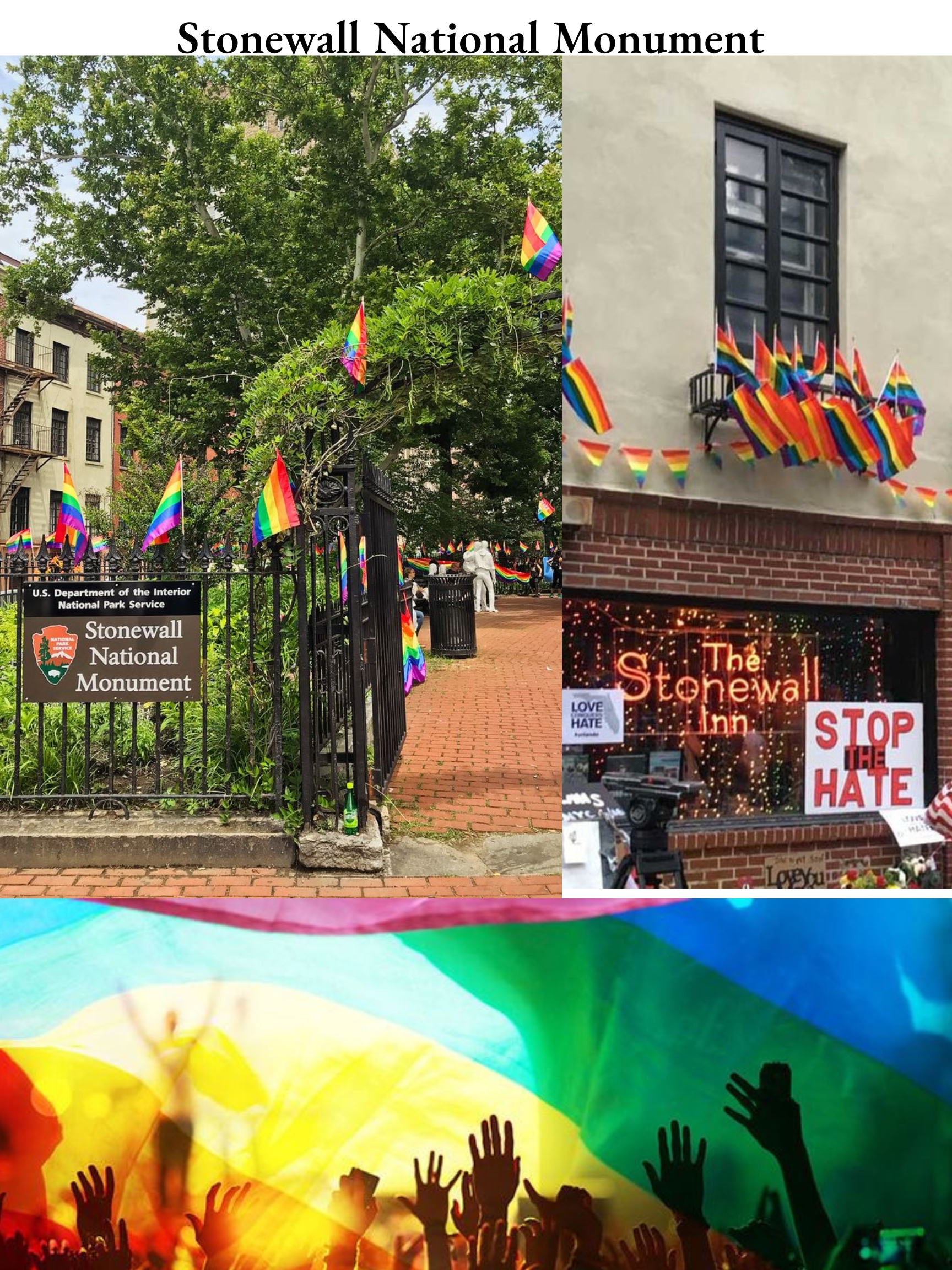
Stonewall National Monument

Shema A.

New York, NY

The Stonewall National Monument is an encapsulated memory of the uprising on June 18, 1969, where both gay and lesbian people got tired and angry of the often discriminatory police raids.

LGBTQ+ rights

stonewall-national-monument

https://dl.dropboxusercontent.com/scl/fi/462d5df0t9fkvh42ouu43/Stonewall.m4a?rlkey=bhx4j72m8qaxwiiqvv8f8nucm&st=y9dndywu&dl=0

Catawba Nation Tribal Government / Longhouse

Lilli R.

Rock Hill, South Carolina

On October 27, 1993, President Bill Clinton signed the Catawba Indian Tribe of South Carolina Land Claims Settlement Act, a major milestone in the Catawba Nation's decades-long fight for Indigenous sovereignty and recognition of land rights. The Catawba people had faced the loss of much of their ancestral territory and federal termination legislation enacted in 1959. After pursuing legal claims concerning approximately 140,000 acres of disputed land, the Nation negotiated a settlement involving South Carolina, federal authorities, and local governments. The 1993 Act approved the settlement framework, repealed the termination law, and established the legal process for restoring the federal trust relationship. Following the transfer of the reservation into federal trust in January 1994, the restoration provisions took effect. The agreement represented a landmark achievement in Indigenous self-determination while also involving compromises concerning land claims and legal jurisdiction.

LGBTQ+ rights

catawba-indian-nation-federal-trust-restoration-1993

https://dl.dropboxusercontent.com/scl/fi/8nztqv0rsw2wewzvr7h6s/catawba-federal-trust-restoration-1993-narration.mp3?rlkey=c6yxybcy5s0rjmxhmnh1b9mhm&st=fuae6jf0&dl=0

Hospital Strike of 1969 Historical Marker

Lilli R.

Charleston, South Carolina

In 1969, more than four hundred predominantly African American women hospital workers in Charleston, South Carolina, launched a historic strike demanding fair wages, equal treatment, dignity, and union rights. Led by workers including Mary Moultrie, the protest began after twelve employees at Medical College Hospital were dismissed following efforts to raise workplace grievances. Workers at Charleston County Hospital also joined the struggle. The Southern Christian Leadership Conference supported the campaign, bringing national civil rights leaders including Ralph Abernathy, Andrew Young, and Coretta Scott King to Charleston. On Mother's Day, approximately five thousand demonstrators marched in solidarity with the workers. After 113 days of labor conflict, settlements brought wage improvements, grievance procedures, and promises of better treatment, although the workers did not achieve formal union recognition. The Charleston Hospital Workers' Strike became an important chapter in American labor, women's, and racial equality history.

LGBTQ+ rights

charleston-hospital-workers-strike-1969

https://dl.dropboxusercontent.com/scl/fi/um9y9r99jzt2bj0qr9bwa/charleston-hospital-workers-strike-1969-narration.mp3?rlkey=6nlfjbem201pm8rnnf9ih0i5r&st=46h503rj&dl=0

Narragansett Indian Tribal Administration Building

Julian B.

Charlestown, Rhode Island

In 1983, the Narragansett Indian Tribe of Rhode Island achieved federal recognition after generations of efforts to defend its identity, ancestral lands, and right to self-government. Despite attempts by Rhode Island authorities in the nineteenth century to dissolve the Tribe's legal status, Narragansett families preserved their community, traditions, and governing institutions. In the 1970s, tribal leaders pursued land claims and compiled historical and genealogical evidence for a federal acknowledgment petition. On April 11, 1983, the U.S. Department of the Interior's recognition became effective, formally acknowledging the Narragansett Indian Tribe's government-to-government relationship with the United States. The milestone strengthened the Tribe's ability to pursue self-determination and protect its cultural heritage, while important questions about land and jurisdiction continued.

LGBTQ+ rights

narragansett-indian-tribe-federal-recognition-1983

https://dl.dropboxusercontent.com/scl/fi/6hjsr37fc41b0k1jiyf4h/narragansett-tribe-recognition-1983-narration.mp3?rlkey=k70mb6umzm7gwz5tpnonair56&st=b563sp2t&dl=0

Moshassuck Cemetery — 1934 Strike Confrontation Site

Julian B.

Saylesville, Rhode Island

In September 1934, thousands of textile workers across the United States joined a nationwide strike demanding fair wages, improved working conditions, and the right to organize unions. In Saylesville, Rhode Island, clashes developed around the operating Sayles' Bleacheries plant as textile workers and unemployed residents gathered in solidarity. Police, private guards, and National Guard troops attempted to disperse demonstrations. During the night of September 11–12, protesters were driven into nearby Moshassuck Cemetery, where Guardsmen opened fire. Eighteen-year-old Charles Goroynski and forty-four-year-old William Blackwood were fatally wounded, while Nicholas Gravello survived a gunshot injury. The event became known as the Saylesville Massacre and remains a powerful example of the sacrifices made by workers seeking fair treatment and collective bargaining rights during the Great Depression.

LGBTQ+ rights

saylesville-massacre-textile-workers-strike-1934

https://dl.dropboxusercontent.com/scl/fi/oswqns9h94694qfo3rdut/saylesville-massacre-textile-strike-1934-narration.mp3?rlkey=xabuwmpz14mcwn11ahmoths7b&st=y5ufopiw&dl=0

Dewey's Sit-In Pennsylvania Historical Marker

Gina P.

Philadelphia, Pennsylvania

On April 25, 1965, three teenagers staged a sit-in at Dewey's Restaurant at 219 South 17th Street in Philadelphia, Pennsylvania, to protest discrimination against gay, lesbian, and gender-nonconforming customers. The restaurant had denied service to approximately 150 people because of their perceived sexual orientation or gender expression. When the teenagers refused to leave, police arrested them along with Clark Polak, president of the Janus Society, who offered legal assistance. Janus Society activists, including Robert L. Sitko, continued protesting outside the restaurant and distributed approximately 1,500 leaflets. On May 2, a second sit-in ended without arrests, and management subsequently stopped its discriminatory service policy. The protests became one of the earliest documented successes of LGBTQ+ direct-action organizing in the United States, preceding the 1969 Stonewall uprising.

LGBTQ+ rights

deweys-restaurant-lgbtq-rights-sit-ins-1965

https://dl.dropboxusercontent.com/scl/fi/hkzak1942ockbz7sxiwbb/deweys-restaurant-lgbtq-rights-sit-ins-1965-narration.mp3?rlkey=fdzusf5z6mntfk71haos43h9w&st=q5nno9xp&dl=0

Christiana Resistance Historical Marker

Gina P.

Christiana, Pennsylvania

On September 11, 1851, William and Eliza Parker and a group of Black and white neighbors resisted an attempt to capture four freedom seekers near Christiana, Pennsylvania. Maryland enslaver Edward Gorsuch arrived with a federal officer and companions to reclaim men who had escaped slavery, relying on the Fugitive Slave Act of 1850. Eliza Parker raised the alarm, and community members gathered to defend the men. A violent confrontation followed, leaving Gorsuch dead and others wounded. Federal authorities arrested and indicted dozens of people on treason charges. During proceedings in Philadelphia, Castner Hanway was acquitted, and the remaining treason prosecutions did not produce convictions. The Christiana Resistance became an important symbol of African American self-defense, interracial abolitionist cooperation, and resistance to the enforcement of slavery.

LGBTQ+ rights

christiana-resistance-treason-trials-1851

https://dl.dropboxusercontent.com/scl/fi/sl8pm21ay16i88g39lgjg/christiana-resistance-treason-trials-1851-narration.mp3?rlkey=q74coym3urlp7m23g3krxt8ht&st=8wx5thar&dl=0

Coal Miners Monument / Wall of Memories

Isabelle M.

McAlester, Oklahoma

Peter Hanraty (1864–1932), a Scottish-born coal miner and labor organizer, became an influential advocate for workers' rights and mine safety in Indian Territory and early Oklahoma. Having worked in coal mines from childhood, Hanraty understood the dangers of underground mining and the hardships faced by workers and their families. During the 1890s and early 1900s, he helped organize miners against wage reductions, unsafe workplaces, and unfair treatment. His union leadership contributed to improvements in collective bargaining, working hours, and regular wage payments. In 1903, he became the first president of the Twin-Territorial Federation of Labor. He later participated in Oklahoma's 1906–1907 Constitutional Convention and supported laws protecting workers and improving mine safety. His efforts became an important part of Oklahoma's labor reform history.

LGBTQ+ rights

peter-hanraty-indian-territory-coal-miners-rights-1890s-1907

https://dl.dropboxusercontent.com/scl/fi/f9se3fp9ul5l4rxqgcffg/peter-hanraty-miners-rights-mine-safety-narration.mp3?rlkey=7mpymv2f1ypwaoggv6rqwehh8&st=y29jssr8&dl=0

Monnet Hall — Former University of Oklahoma College of Law

Isabelle M.

Norman, Oklahoma

In 1946, Ada Lois Sipuel Fisher, a qualified African American applicant, challenged racial segregation at the University of Oklahoma College of Law after being denied admission solely because of her race. Supported by the NAACP and attorneys including Thurgood Marshall and Amos T. Hall, Fisher brought her case through the courts. On January 12, 1948, the United States Supreme Court ruled that Oklahoma must provide her a legal education on equal terms without delay. After the state attempted to maintain segregation through a separate law school, Fisher was finally admitted to the University of Oklahoma on June 18, 1949. Although discriminatory seating and facilities initially remained, her struggle became a major milestone in the fight for racial equality and access to higher education.

LGBTQ+ rights

ada-lois-sipuel-fisher-ou-law-desegregation-1946-1949

https://dl.dropboxusercontent.com/scl/fi/l3g7bwr8etlkktyxh85hg/ada-lois-sipuel-fisher-ou-law-1946-1949-narration.mp3?rlkey=w93x7bwnzmafrxs3h7bfjd3dg&st=n2y43mx4&dl=0

Electric Auto-Lite Strike Historical Marker / Union Memorial Park

Sarah Z.

Toledo, Ohio

In 1934, workers at Toledo's Electric Auto-Lite Company joined a major labor struggle against low wages, anti-union practices, and unfair working conditions during the Great Depression. After initial walkouts in February, a larger strike developed in April when management refused to recognize the workers' union. The Lucas County Unemployed League helped mobilize thousands of supporters despite a court injunction limiting picketing. In May, confrontations between demonstrators, police, and Ohio National Guard troops escalated around the factory. On May 24, Guardsmen fired into the crowd, killing Steve Cyigon and Frank Hubay. The strike ended in June with union recognition and became a significant event in the growth of American industrial unionism and the labor movement.

LGBTQ+ rights

toledo-auto-lite-strike-1934

https://dl.dropboxusercontent.com/scl/fi/l9d15fd3nx2chq6x4ltr2/toledo-auto-lite-strike-1934-narration.mp3?rlkey=e8h5qe1bejbsceczv8qpi2thi&st=p6bzhzh6&dl=0

Site of the American House / Wadsworth Hotel — now Herrick Memorial Library

Sarah Z.

Wellington, Ohio

On September 13, 1858, Black and white abolitionists from Oberlin and Wellington, Ohio, joined together to rescue John Price, a young man who had escaped slavery in Kentucky. Federal officers and slave catchers seized Price near Oberlin under the Fugitive Slave Act of 1850 and took him to a hotel in Wellington to await transportation south. Hundreds of residents gathered outside the building, and a group entered the hotel and freed Price. He was returned to Oberlin, sheltered by supporters, and is believed to have escaped to Canada. Federal authorities subsequently indicted thirty-seven rescuers, including African American participants. Two men, Charles Langston and Simeon Bushnell, were convicted in 1859. The event became a nationally significant challenge to slavery and the federal government's enforcement of fugitive-slave laws.

LGBTQ+ rights

oberlin-wellington-rescue-1858

https://dl.dropboxusercontent.com/scl/fi/y222yqd6rmpmrzgseb5ds/oberlin-wellington-rescue-1858-narration.mp3?rlkey=zet9il9pyq60bn9zlltu4x3qq&st=0c8okiwn&dl=0

Pauli Murray Family Home

Jace J.

Durham, North Carolina

The Pauli Murray Family Home at 906 Carroll Street in Durham, North Carolina, preserves the childhood residence of Pauli Murray (1910–1985), a pioneering civil rights lawyer, legal scholar, writer, feminist organizer, LGBTQ+ historical figure, and Episcopal priest. Built in 1898 by Murray's grandparents, the house became an important source of family support and personal identity after Murray moved to Durham in 1914. Murray later challenged racial segregation, developed influential legal arguments against both racial and sex discrimination, and helped found the National Organization for Women in 1966. In 1977, Murray became the first African American woman ordained as a priest in the Episcopal Church. Recognized as a National Historic Landmark in 2016, the restored family home now serves as the Pauli Murray Center for History and Social Justice, connecting Murray's legacy to continuing movements for equality.

LGBTQ+ rights

pauli-murray-family-home-civil-rights-legacy

https://dl.dropboxusercontent.com/scl/fi/0nminad08lkqeuv8dsfo3/pauli-murray-family-home-civil-rights-legacy-narration.mp3?rlkey=ueefkrmfb3daau41249sdf1ar&st=gg8xt783&dl=0

Battle of Hayes Pond Historical Marker (I-93)

Jace J.

Maxton, North Carolina

On January 18, 1958, hundreds of Lumbee people and supporters gathered near Hayes Pond outside Maxton, North Carolina, to oppose a Ku Klux Klan rally organized by James W. “Catfish” Cole. The Klan had attempted to intimidate the Lumbee community through racist threats and public demonstrations. When the Klansmen assembled for their nighttime rally, they were dramatically outnumbered by Lumbee residents determined to defend their community. During the confrontation, gunfire occurred, the rally dispersed, and the Klansmen fled. Photographs of Lumbee men displaying a captured Klan banner became powerful symbols of resistance to racial intimidation. The Battle of Hayes Pond remains an important event in Native American civil rights history and a demonstration of Lumbee community solidarity.

LGBTQ+ rights

battle-of-hayes-pond-1958-lumbee-civil-rights

https://dl.dropboxusercontent.com/scl/fi/afh78xtexnfyrflkqvg6g/battle-of-hayes-pond-1958-narration.mp3?rlkey=3yjx2g8ftw5aykugm472dlxhy&st=jth0sfu1&dl=0

Treaty of 1857 Historical Marker

Shania S.

Basom, New York

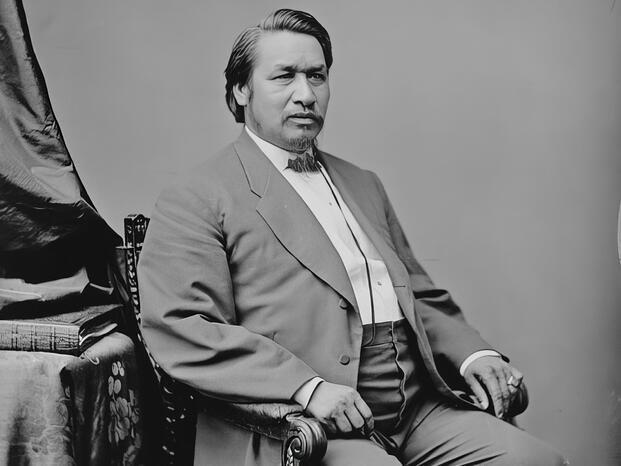
Between 1852 and 1857, the Tonawanda Seneca defended their ancestral lands against attempts by private land purchasers to displace them under disputed treaty claims. After Joseph Fellows forcibly entered John Blacksmith's sawmill property on the Tonawanda Reservation, Blacksmith challenged the intrusion in court. The New York Court of Appeals ruled in Blacksmith's favor in 1852. On March 5, 1857, the United States Supreme Court affirmed, holding that private purchasers had no authority under the treaties to forcibly remove the Seneca. With leadership from Ely S. Parker and other Tonawanda representatives, the community also pursued negotiations that produced a new treaty in November 1857, creating a process for recovering reservation lands through purchase. Their efforts became an important chapter in Indigenous land rights, treaty enforcement, and tribal self-determination.

LGBTQ+ rights

tonawanda-seneca-land-rights-blacksmith-v-fellows-1852-1857-d

https://dl.dropboxusercontent.com/scl/fi/t00o9a38w65gjoi1mv5oh/tonawanda-seneca-blacksmith-fellows-1852-1857-narration.mp3?rlkey=n9pp09wgkelgufbfczur34pyi&st=pifa8t6u&dl=0

Kate Mullany National Historic Site

Shania S.

Troy, New York

In February 1864, Irish immigrant laundry worker Kate Mullany and fellow organizer Esther Keegan helped establish the Collar Laundry Union in Troy, New York. Approximately 200 to 300 women organized against low wages, exhausting workdays, dangerous heat, and injuries caused by newly introduced machinery. Their strike brought higher wages after about a week and demonstrated that women industrial workers could successfully bargain collectively. The union remained active for several years, supporting other labor organizations and promoting women's participation in the labor movement. In 1868, Mullany became one of the first women to hold national labor-union office. Her surviving home at 350 Eighth Street, occupied after the original strike, is now preserved as the Kate Mullany National Historic Site, commemorating this early struggle for women's labor rights.

LGBTQ+ rights

kate-mullany-house-collar-laundry-union-1864

https://dl.dropboxusercontent.com/scl/fi/8eibmc9nc79gzblcg6871/kate-mullany-collar-laundry-union-1864-narration.mp3?rlkey=lx24br4bim0z81p4iswbwcwqs&st=l4oo4zn0&dl=0

Ladies Auxiliary of Local 890 Historical Marker

Lloyd D.

Hanover, New Mexico

On October 17, 1950, predominantly Mexican American miners at the Empire Zinc Company in Hanover, New Mexico, began a strike against unequal wages, discriminatory job assignments, and unsafe working conditions. Organized through Local 890 of the International Union of Mine, Mill, and Smelter Workers, the dispute continued for fifteen months. After a court injunction restricted striking miners from maintaining their picket line in June 1951, their wives and other female relatives stepped forward to continue the protest. Women faced arrests, intimidation, and violence while demanding fair treatment and improved living conditions for working families. A January 1952 agreement brought meaningful wage gains, although not every demand was met. Their struggle later inspired the 1954 film Salt of the Earth and became a landmark of Mexican American labor activism and women's organizing.

LGBTQ+ rights

empire-zinc-salt-of-the-earth-strike-1950-1952

https://dl.dropboxusercontent.com/scl/fi/72arajbsbn97prgik8oj7/empire-zinc-salt-of-the-earth-strike-1950-1952-narration.mp3?rlkey=0mxtyzswnuo1h9mh7tltkybqt&st=9xjmoqpc&dl=0

Ladies Auxiliary of Local 890 Historical Marker

Lloyd D.

Hanover, New Mexico

On October 17, 1950, predominantly Mexican American miners at the Empire Zinc Company in Hanover, New Mexico, began a strike against unequal wages, discriminatory job assignments, and unsafe working conditions. Organized through Local 890 of the International Union of Mine, Mill, and Smelter Workers, the dispute continued for fifteen months. After a court injunction restricted striking miners from maintaining their picket line in June 1951, their wives and other female relatives stepped forward to continue the protest. Women faced arrests, intimidation, and violence while demanding fair treatment and improved living conditions for working families. A January 1952 agreement brought meaningful wage gains, although not every demand was met. Their struggle later inspired the 1954 film Salt of the Earth and became a landmark of Mexican American labor activism and women's organizing.

LGBTQ+ rights

miguel-trujillo-and-trujillo-v-garley-1948----native-american-voting-rights

https://dl.dropboxusercontent.com/scl/fi/llsoby9llumerxy2ga1un/miguel-trujillo-native-voting-rights-1948-narration.mp3?rlkey=7lgd58ti9m76w7m9rh6of10yc&st=kpsux5pg&dl=0

Pietro and Maria Botto House — American Labor Museum

Henry S.

Haledon, New Jersey

In 1913, thousands of silk workers in Paterson, New Jersey, organized a major labor strike against increased workloads, low wages, and long working hours. Beginning with a walkout at the Henry Doherty mill on January 27, the dispute spread across nearly 300 silk mills and dye houses, involving approximately 24,000 workers by late February. The Industrial Workers of the World helped unite immigrant laborers, women, skilled weavers, and dye-house workers in demands for an eight-hour workday, higher wages, and fairer loom assignments. The Pietro and Maria Botto House in nearby Haledon became a central gathering place, where prominent organizers addressed mass rallies. Although the strike ended without securing its main demands in July 1913, it became a significant event in American labor history and immigrant workers' collective organizing.

Labor

paterson-silk-strike-1913

https://dl.dropboxusercontent.com/scl/fi/w2uxsrqfmgjv5h0la72uc/paterson-silk-strike-1913-narration.mp3?rlkey=fjtjb5v0dv576499if1lg8jbq&st=bd5nrxv6&dl=0

New Jersey State House — 1807 Voting Rights Legislation

Henry S.

Trenton, New Jersey

On November 16, 1807, New Jersey lawmakers passed an election law that stripped women and free Black residents of voting rights they had previously exercised under the state's 1776 constitution. The original constitution had allowed eligible adult inhabitants who met property and residency requirements to vote, regardless of whether they were men or women, Black or white. During the 1790s and early 1800s, unmarried and widowed women, along with some free African Americans, participated in elections. Following political disputes and accusations of electoral fraud, the legislature restricted voting to free white male citizens. The law represented a major reversal of early voting equality and illustrates how rights previously recognized by a state could be taken away through legislation.

Labor

new-jersey-women-free-black-voters-disenfranchisement-1807

https://dl.dropboxusercontent.com/scl/fi/cl2ifg0euio0xtmt38hg8/new-jersey-voting-rights-disenfranchisement-1807-narration.mp3?rlkey=nnbdroxcknlckhqpx647t17wg&st=5l9m92qm&dl=0

Kate Waller Barrett Branch Library

Jayce J.

Alexandria, Virginia

On August 21, 1939, five African American men staged a peaceful sit-in at Alexandria's segregated public library in Virginia. Organized by civil rights attorney Samuel Wilbert Tucker, William Evans, Otto L. Tucker, Edward Gaddis, Morris Murray, and Clarence Strange requested library cards at the whites-only facility. When refused, each man selected a book and quietly sat down to read. Police arrested all five for disorderly conduct, despite their nonviolent behavior. The protest challenged racial discrimination in publicly supported facilities and became one of America's earliest documented library sit-ins. Instead of immediately integrating the library, Alexandria opened a separate branch for Black residents in 1940. The original library later became accessible to all residents, and the sit-in remains an important milestone in the struggle for equal public services.

LGBTQ+ rights

alexandria-library-sit-in-samuel-tucker-1939

https://dl.dropboxusercontent.com/scl/fi/jtq58vbd1jqy0eh7lnw93/alexandria-library-sit-in-samuel-tucker-1939-narration.mp3?rlkey=p0bukfns1x12u9mxd1b16olpy&st=qpz73448&dl=0

North Dakota State Capitol — Women's Equality Legislative Reform Site

Addyson R.

Bismarck, North Dakota

In 1964, Governor William Guy established the North Dakota Commission on the Status of Women following advocacy by women's professional and educational organizations. Led by chair Agnes Geelan and vice-chair Dagny Olson, the commission investigated unequal employment opportunities, discriminatory laws, and barriers to women's civic participation. Its members gathered statistics, consulted citizens, examined state legislation, and organized a July 1964 conference in Bismarck. Their December report recommended reforms to strengthen women's economic and legal rights. Significant results included a state equal-pay law in 1965 and the repeal of women's exemption from jury service in 1967. Although the commission received no initial operating budget, its research and advocacy helped advance women's employment and civic equality in North Dakota.

LGBTQ+ rights

north-dakota-commission-status-women-1964-1967

https://dl.dropboxusercontent.com/scl/fi/cf4bctnafgikgcg50wzfg/north-dakota-commission-women-1964-1967-narration.mp3?rlkey=xnrbcl3wuqm44wgpjyzrj43hw&st=z1cp0l5k&dl=0

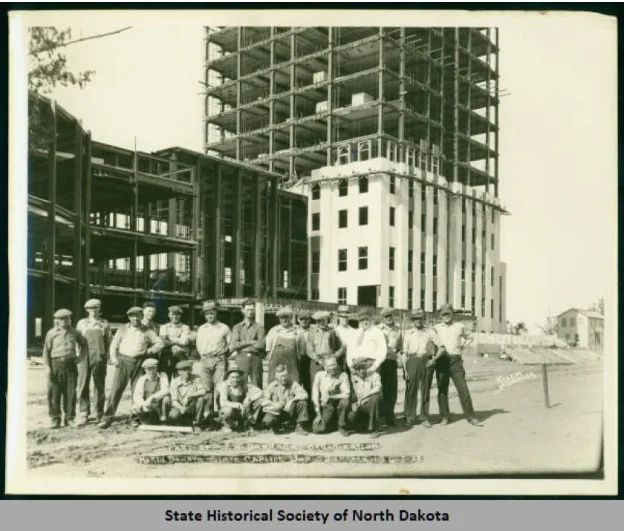
North Dakota State Capitol Construction Site

Addyson R.

Bismarck, North Dakota

On May 16, 1933, construction laborers working on North Dakota's new State Capitol in Bismarck went on strike to demand fairer wages during the Great Depression. Common laborers earning thirty cents per hour requested an increase to fifty cents, establishing a picket line near the Liberty Memorial Building and halting construction work. Tensions escalated as workers, contractors, and state officials struggled to reach an agreement. On June 1, Governor William Langer declared martial law in Bismarck. The following day, union representatives and contractors negotiated a settlement guaranteeing at least forty cents per hour. The twelve-day work stoppage became an important example of organized labor challenging low wages and demanding better treatment during one of America's most difficult economic periods.

LGBTQ+ rights

north-dakota-state-capitol-construction-workers-strike-1933

https://dl.dropboxusercontent.com/scl/fi/09p5x9mof1vw07nmuipkt/north-dakota-capitol-construction-strike-1933-narration.mp3?rlkey=g69qkkntqw6nxwcqaj2la9cw7&st=17ip48vz&dl=0

PCUN Headquarters and Union Hall

Deshona W.

Woodburn, Oregon

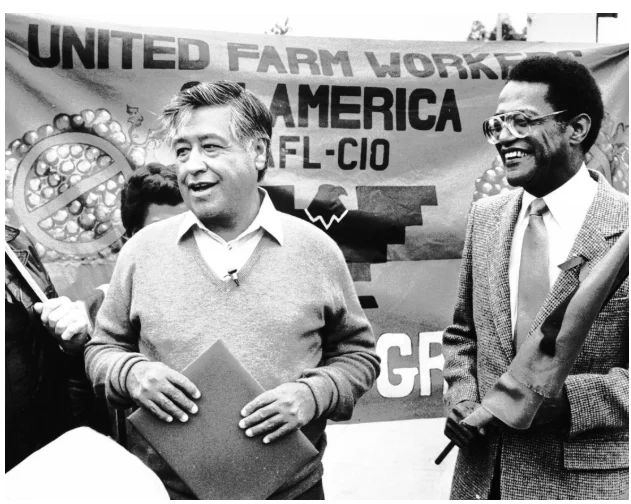
In April 1985, approximately eighty farmworkers and tree planters formed Pineros y Campesinos Unidos del Noroeste (PCUN), a labor organization based in Woodburn, Oregon. Growing out of the Willamette Valley Immigration Project, PCUN united primarily Latino immigrant workers seeking protection from low wages, unsafe conditions, discrimination, and exploitation by labor contractors. Early organizers included Cipriano Ferrel, Ramón Ramírez, and other workers and advocates. The union supported immigration assistance, pesticide-safety campaigns, wage recovery, collective bargaining rights, and workplace organizing. Its later campaigns included the 1991 farmworker strike and the NORPAC boycott. PCUN became an important force for workers' rights, racial equality, and Latino community leadership throughout Oregon's Willamette Valley.

LGBTQ+ rights

pcun-farmworkers-rights-movement-1985

https://dl.dropboxusercontent.com/scl/fi/fuv9yn049g6yvcgvlbqko/pcun-farmworkers-rights-1985-narration.mp3?rlkey=gap9bpqi1d7stq632j88y8x3x&st=xjow9bww&dl=0

Klamath Tribes Tribal Administration — Federal Restoration Heritage

Deshona W.

Chiloquin, Oregon

On August 27, 1986, the Klamath Tribes of southern Oregon regained federal recognition through the Klamath Indian Tribe Restoration Act, Public Law 99-398. The Klamath, Modoc, and Yahooskin peoples had endured decades of hardship after Congress terminated their federal trust relationship in 1954, disrupting government services, communal land ownership, and tribal economic security. Through persistent organizing, advocacy, and legal action, tribal leaders defended treaty rights and demanded restoration of their government-to-government relationship with the United States. Although the 1986 law restored federal recognition, eligibility for federal services, and many legal protections, it did not return the former reservation lands. The restoration marked an important victory for Indigenous self-determination, cultural survival, and tribal sovereignty in Oregon.

LGBTQ+ rights

klamath-tribes-federal-recognition-restoration-1986

https://dl.dropboxusercontent.com/scl/fi/nq1r8xb94xonoahu62f1q/klamath-tribes-federal-restoration-1986-narration.mp3?rlkey=gmzlqktqipepopxgos4a3hjbt&st=c4m6tjrn&dl=0

Former Laconia State School and Training Center Campus

Tegan W.

Laconia, New Hampshire

On April 12, 1978, six residents of New Hampshire's Laconia State School and Training Center filed a landmark federal civil rights lawsuit challenging inadequate education, staffing, treatment, and services for people with intellectual and developmental disabilities. In Garrity v. Gallen, the plaintiffs argued that state officials had failed to protect residents' rights. Following a lengthy trial, a federal judge ruled in 1981 that the institution had violated disability discrimination and education laws, ordering individualized service plans and institutional reforms. The case helped accelerate New Hampshire's movement toward community-based disability services. On January 31, 1991, Laconia State School closed, marking a significant milestone in the history of disability rights and the movement away from large state institutions.

LGBTQ+ rights

garrity-v-gallen-laconia-state-school-1978-1991

https://dl.dropboxusercontent.com/scl/fi/1zt4vo08oq3k8qau8wfh9/garrity-v-gallen-laconia-1978-1991-narration.mp3?rlkey=dlivahisu11hmit9kmsdxz086&st=0xneh2i3&dl=0

Moffatt-Ladd House — Prince Whipple and Winsor Moffatt Historical Marker

Tegan W.

Portsmouth, New Hampshire

On November 12, 1779, a group of twenty enslaved men in Portsmouth, New Hampshire, signed a remarkable petition calling for the abolition of slavery. Among them were Prince Whipple and Winsor Moffatt. Drawing upon the revolutionary ideals of liberty, equality, natural rights, and human dignity, they challenged the contradiction between America's fight for independence and the continued enslavement of African people. The New Hampshire legislature considered their petition on April 25, 1780, but took no effective action to end slavery. Although their immediate appeal failed, the petition became an important early expression of Black political activism and the struggle for racial equality in America. New Hampshire formally revisited the petitioners' claims through posthumous emancipation legislation in 2013.

LGBTQ+ rights

1779-new-hampshire-abolition-petition-prince-whipple

https://dl.dropboxusercontent.com/scl/fi/v79tcpkif99s2qgpa2yz2/1779-new-hampshire-freedom-petition-narration.mp3?rlkey=6vcvi97xpfnv1ppa0ejsc8iue&st=fzimkkt5&dl=0

Original Radium Dial Company Factory Site

Shan

Ottawa, Illinois

Beginning in 1922, young women at Ottawa's Radium Dial Company painted luminous clock and watch faces using radioactive paint. Workers were instructed to shape their brushes with their lips, unknowingly ingesting radium that caused severe illness, bone damage, and deaths. Catherine Wolfe Donohue became a leading voice in the campaign for compensation and safer working conditions. After an unsuccessful legal effort in 1935, the women pursued their case before the Illinois Industrial Commission in 1937. They won a compensation award in 1938, although Donohue died that July. In October 1939, the United States Supreme Court declined to hear the company's final appeal. Their struggle became an important milestone in women's labor rights and occupational health protections.

LGBTQ+ rights

catherine-wolfe-donohue-ottawa-radium-girls

https://dl.dropboxusercontent.com/scl/fi/qt814jfrwfa06tlkt6mep/catherine-donohue-ottawa-radium-girls-narration.mp3.mp3?rlkey=ts7tfvd18d44wwwvr9h3lnx0e&st=jallzldv&dl=0

Illini Union — Project 500 Student Sit-In Site

Shan

Urbana–Champaign, Illinois

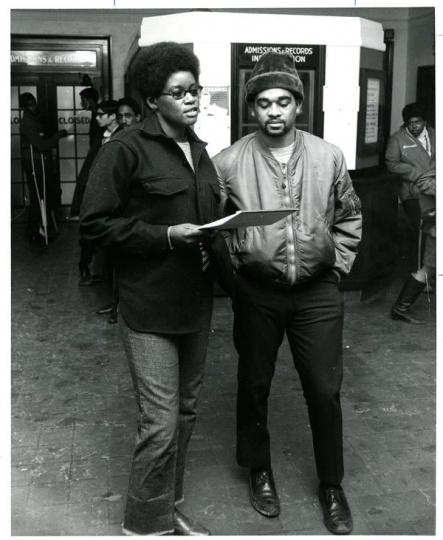
In September 1968, students at the University of Illinois Urbana-Champaign challenged racial inequality through a major protest connected to Project 500, a new initiative designed to expand educational opportunities for disadvantaged students. Although the program brought 565 additional African American and Latino students to campus, inadequate housing, delayed transportation, and confusion over promised financial aid created frustration. On September 9–10, students gathered at the Illini Union in protest. Police arrested approximately 240–252 people, according to differing university historical accounts. The confrontation helped strengthen Black student organizing and prompted demands for fair treatment, meaningful institutional support, Black cultural programming, and African American studies. Project 500 became an important turning point in the university's history of educational access and racial equality.

LGBTQ+ rights

project-500-black-student-sit-in-1968

https://dl.dropboxusercontent.com/scl/fi/x540unwyfhbt5tru7cnjg/project-500-1968-black-student-sit-in-narration.mp3.mp3?rlkey=56dnjed762p01u7e9788oq5je&st=4nnj01os&dl=0

Dann Family Ranch — Western Shoshone Ancestral Lands

Analeiyah R.

Crescent Valley, Nevada

Carrie and Mary Dann, two Western Shoshone sisters from Crescent Valley, Nevada, became nationally and internationally recognized advocates for Indigenous land rights and tribal sovereignty. Beginning in the 1970s, they challenged federal grazing restrictions and government claims to Western Shoshone ancestral territory, arguing that their people had never surrendered ownership under the 1863 Treaty of Ruby Valley. Their struggle reached the United States Supreme Court in 1985 and the Inter-American Commission on Human Rights, which issued a significant ruling in 2002 concerning Indigenous property rights and legal protections. The sisters' decades of activism helped bring international attention to Native American land ownership, treaty rights, and self-determination.

LGBTQ+ rights

carrie-mary-dann-western-shoshone-land-rights

https://dl.dropboxusercontent.com/scl/fi/hd0aj18d7wf6azny0zzpr/carrie-mary-dann-western-shoshone-land-rights-narration.mp3?rlkey=w7mbhi2fx6es3k8mea6dwpd04&st=xoovwhss&dl=0

Goldfield Historic Mining District

Analeiyah R.

Goldfield, Nevada

Between 1906 and 1907, miners and other workers in Goldfield, Nevada, organized major labor strikes demanding fair wages, shorter working hours, and stronger union protections. The Western Federation of Miners and the Industrial Workers of the World worked together to organize miners, restaurant employees, construction laborers, and other workers. Their collective action helped establish the eight-hour workday and secure wage increases across Goldfield. However, conflicts with mine owners intensified during the economic crisis of 1907. Federal troops arrived in December after Nevada officials requested military assistance. The Goldfield labor struggles became an important chapter in American workers' rights history, demonstrating both the achievements and challenges of early industrial union organizing.

LGBTQ+ rights

goldfield-miners-labor-strikes-1906-1907

https://dl.dropboxusercontent.com/scl/fi/3ze8peoea78ejgj76utku/goldfield-miners-labor-strikes-1906-1907-narration.mp3?rlkey=5lqqaocm7ouyo28m22ko2tffr&st=1gwqcf86&dl=0

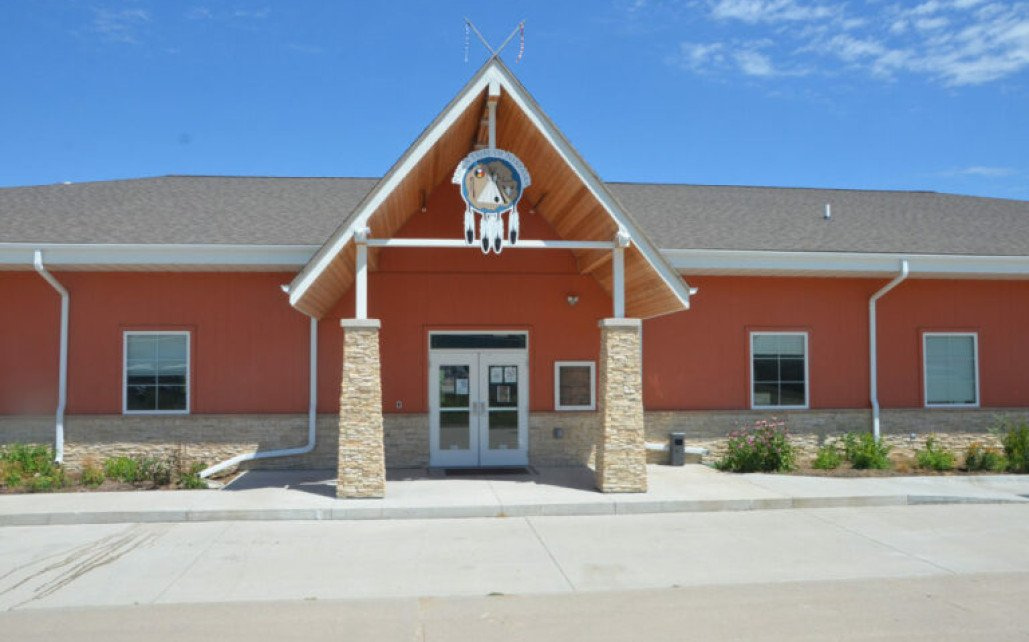
Ponca Tribe of Nebraska — Tribal Headquarters

Ben A.

Niobrara, Nebraska

On October 31, 1990, the Ponca Tribe of Nebraska regained federal recognition after more than two decades without federally recognized tribal status. Congress had enacted legislation terminating the Tribe's federal relationship in 1962, and termination was completed in 1966. Tribal members organized a restoration movement, securing Nebraska state recognition in 1988 and congressional approval of the Ponca Restoration Act in 1990. Signed by President George H. W. Bush, the law restored important tribal rights and access to federal programs while recognizing the Ponca Tribe's governmental status. The restoration became a major achievement in the struggle for Native American rights, cultural preservation, and tribal sovereignty.
LGBTQ+ rights

ponca-tribe-nebraska-federal-recognition-restoration-1990

https://dl.dropboxusercontent.com/scl/fi/jbyatgkeu3p7x6lo4slkb/ponca-tribe-nebraska-restoration-1990-narration.mp3?rlkey=d6i4gz9qbx66u3ahbch43r49b&st=7e6y8lsa&dl=0

Omaha Star Building — De Porres Club Civil Rights Organizing Site

Ben A.

Omaha, Nebraska

From 1952 to 1954, civil rights activists in Omaha, Nebraska, organized a bus and streetcar boycott to challenge racial discrimination in employment. The De Porres Club, supported by Omaha Star publisher Mildred Brown and Catholic priest Father John Markoe, protested the Omaha and Council Bluffs Street Railway Company's refusal to employ African American drivers. Activists distributed leaflets, organized picketing, encouraged alternative transportation, and used the Black press to mobilize the community. Their sustained campaign helped end the company's discriminatory hiring policy in 1954, demonstrating the power of organized nonviolent protest before the better-known Montgomery Bus Boycott.

LGBTQ+ rights

omaha-bus-boycott-de-porres-club-1952-1954

https://dl.dropboxusercontent.com/scl/fi/hbqh8lkqrxtc75865414j/omaha-bus-boycott-1952-1954-narration.mp3?rlkey=ma607qyctzz85hmavnpc84q85&st=tb95ljhf&dl=0

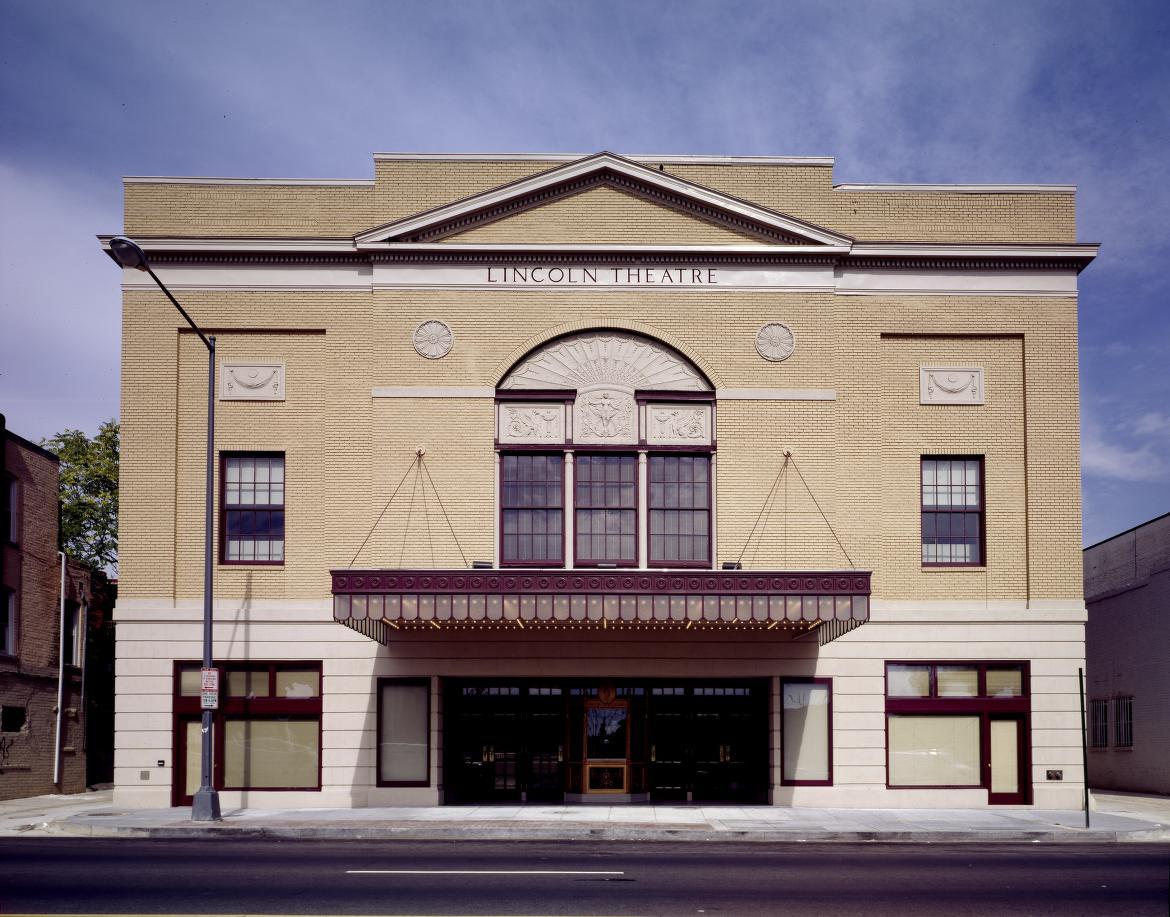
Elouise Cobell Memorial and Blackfeet Reservation

Olivia A.

Browning, Montana

Elouise Pepion Cobell, a Blackfeet banker and Native American rights advocate from Montana, launched a landmark class-action lawsuit in 1996 challenging the federal government's mismanagement of Individual Indian Money trust accounts. These accounts held income generated from Native American lands, including grazing, timber, and mineral leases. After thirteen years of litigation, the federal government agreed to a $3.4 billion settlement in December 2009. Cobell's determined advocacy helped bring national attention to Indigenous property rights, financial accountability, and the federal government's responsibilities to Native American landowners.
LGBTQ+ rights

elouise-pepion-cobell-native-american-trust-fund-lawsuit

https://dl.dropboxusercontent.com/scl/fi/2zg2jz518qfu3b20v5nzs/elouise-pepion-cobell-trust-fund-lawsuit-narration.mp3?rlkey=5armblj09zt734cu9m45d7a7v&st=tl3venat&dl=0

Carpenters' Union Hall — Women's Protective Union Historic Meeting Site
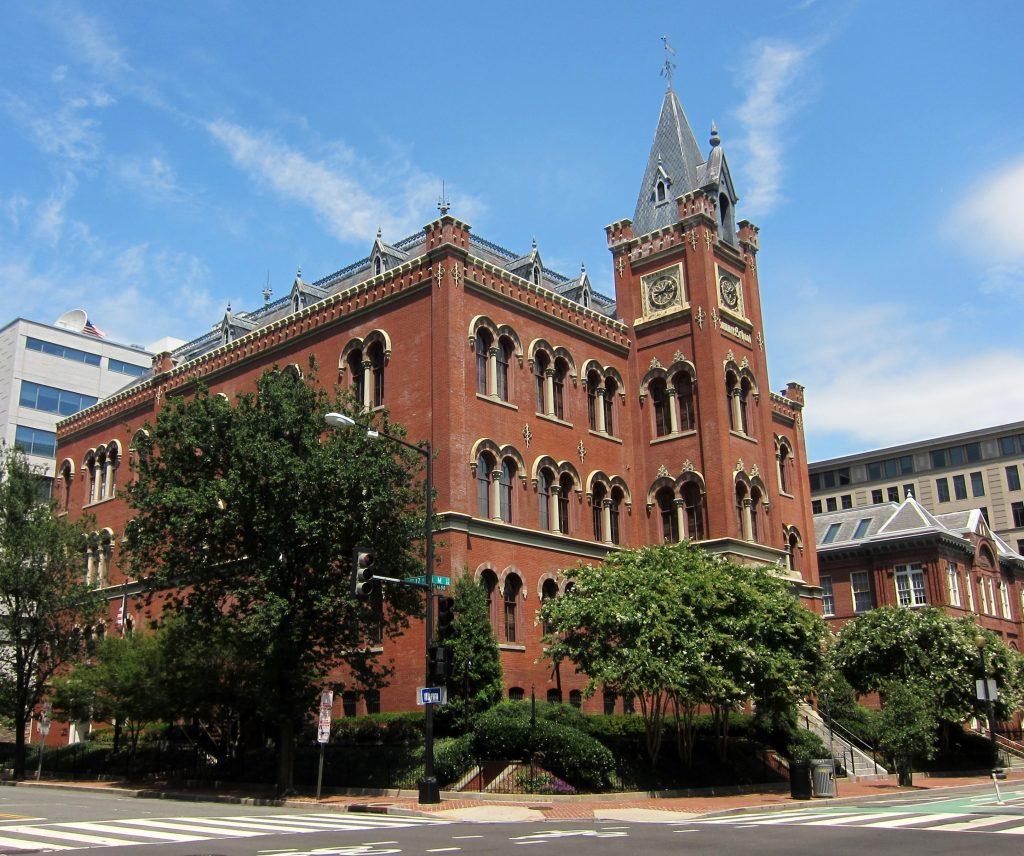
Olivia A.

Butte, Montana

In June 1890, thirty-three working women in Butte, Montana, founded the Women's Protective Union to secure better wages, reasonable hours, and workplace protections. The union represented waitresses, cooks, maids, laundresses, and other service workers in the mining city. It helped establish a ten-hour workday by 1903 and later secured eight-hour shifts, overtime pay, sick leave, and paid vacations. Members organized strikes, provided education, and supported broader labor reforms. By 1955, membership reached 1,149. The historic Carpenters' Union Hall, built in 1906, later housed the union and preserves an important part of Butte's labor history.

LGBTQ+ rights

butte-womens-protective-union-1890

https://dl.dropboxusercontent.com/scl/fi/fzg5osy08gskmh77mef3z/montana-butte-womens-protective-union-1890-narration.mp3?rlkey=sa4qhteu7lfbt4ehzg95jeirz&st=0fq2chec&dl=0

Historic Phoenix House — Phoenix Society for Individual Freedom

Serita W.

Kansas City, Missouri

Founded in Kansas City, Missouri, on March 13, 1966, the Phoenix Society for Individual Freedom became a pioneering Midwestern organization advocating social, legal, and economic equality for gay and lesbian people. Led by activist Drew Shafer, the society published The Phoenix magazine, organized community meetings, and distributed civil rights literature through national homophile networks. In 1968, it established Phoenix House at 1333 East Linwood Boulevard, providing meeting rooms, a lending library, publishing facilities, and temporary support for people facing isolation or rejection. The society also cooperated with religious leaders and public health officials to address discrimination. Although the organization disbanded in 1971, its community-building, publications, and advocacy helped establish foundations for the modern LGBTQ+ rights movement in Kansas City and the American Midwest.

LGBTQ+ Rights

phoenix-society-phoenix-house-kansas-city-1966-1968

https://dl.dropboxusercontent.com/scl/fi/7ztjad8nrrw3oc5u32k61/phoenix-society-phoenix-house-1966-1968.mp3?rlkey=el2d16y75sdnrnoizeat903zt&st=kiewfi17&dl=0

Historic R. E. Funsten Nut Company Factories — 1933 Workers' Strike

Serita W.

St. Louis, Missouri

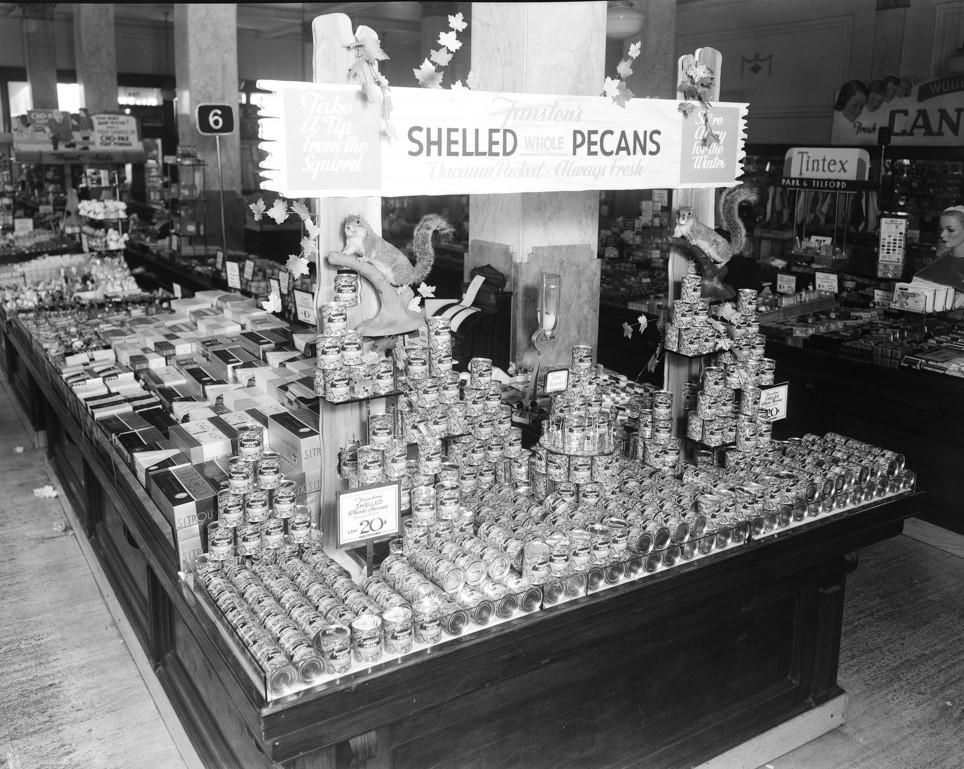
On May 15, 1933, predominantly African American women employed by the R. E. Funsten Nut Company in St. Louis launched a major strike for living wages, racial pay equality, and better factory conditions. Led by workers including Carrie Smith and Cora Lewis, the action spread among the company's pecan-processing plants, with more than one thousand workers participating. Supported by the Food Workers Industrial Union and community activists, the women confronted police arrests, management resistance, and severe Depression-era poverty. Negotiations involving Mayor Bernard F. Dickmann's administration produced an agreement in late May, substantially increasing wages and reducing racial pay disparities, although formal union recognition remained unresolved. The strike became a landmark example of Black women's leadership in labor organizing and economic justice.

LGBTQ+ rights

funsten-nut-workers-strike-1933

https://dl.dropboxusercontent.com/scl/fi/kagm856b6r49fa92or63n/funsten-nut-strike-1933.mp3?rlkey=mw4lifsptbeooa3s7gwe9jsk6&st=1kcf8y2e&dl=0

Former Delta Pride Catfish Main Processing Plant — Indianola

Lakisha H.

Indianola, Mississippi

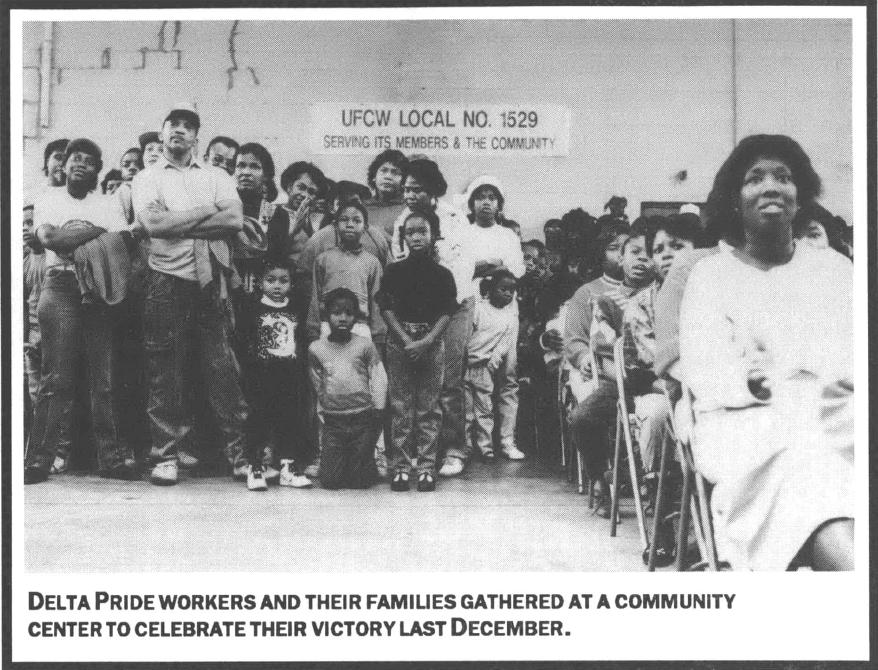
In September 1990, more than 900 predominantly African American employees of Delta Pride Catfish in Mississippi's Delta region launched a thirteen-week strike over low wages, unsafe working conditions, and harsh management practices. Organized through United Food and Commercial Workers Local 1529, workers at Indianola and associated processing facilities demanded fair compensation, protection from repetitive-motion injuries, and greater respect on the job. Black women, including organizers Sarah White, Rose Turner, and Mary Young, helped transform the dispute into a wider campaign for economic justice. Churches, civil rights organizations, and supporters nationwide assisted with food, fundraising, and a product boycott. The December settlement provided wage increases, provisions for returning strikers, and worker participation in health and safety oversight. The struggle linked labor organizing with Mississippi's civil rights legacy.

LGBTQ+ rights

delta-pride-catfish-workers-strike-1990

https://dl.dropboxusercontent.com//scl/fi/q3sozzlyn4pyccux30ym8/delta-pride-workers-strike-1990.mp3?rlkey=i7v3duezynj7zq5c0mc1yky00&st=25eyghti&dl=0

Old Jackson Municipal Library — Tougaloo Nine

Lakisha H.

Jackson, Mississippi

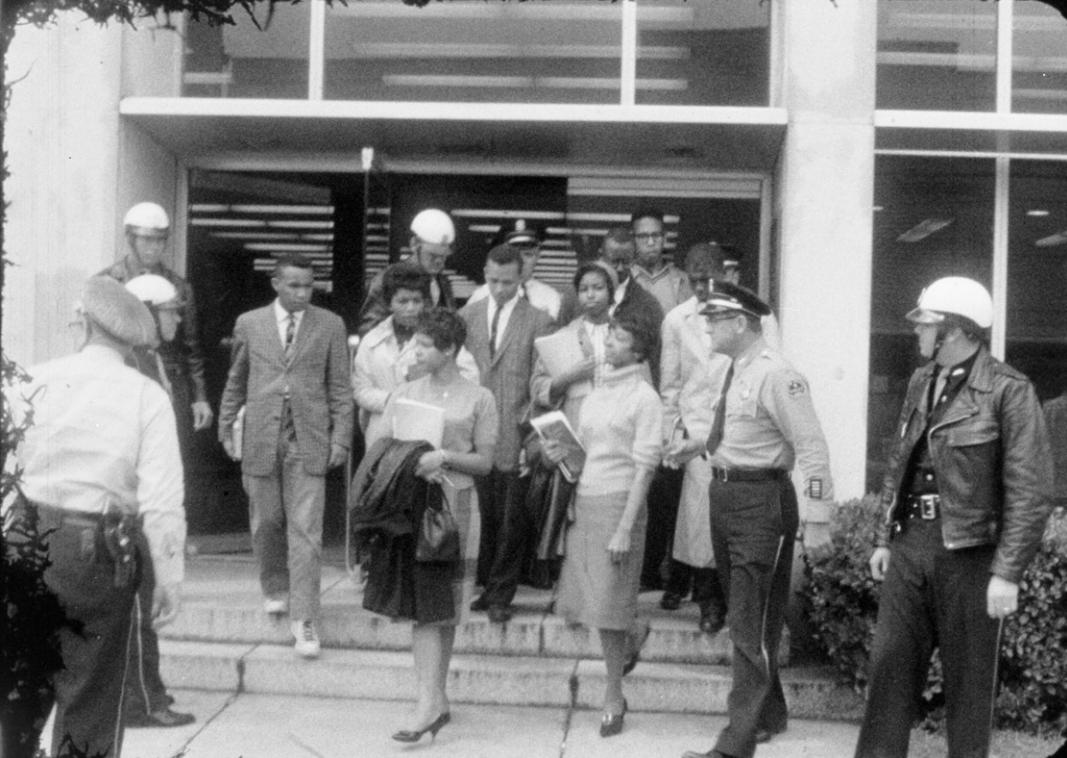
On March 27, 1961, nine African American students from Tougaloo Southern Christian College challenged racial segregation at the whites-only Jackson Municipal Library in Mississippi. Members of the NAACP's North Jackson Youth Council, the students entered the public library, requested research materials, and quietly began reading. When police ordered them to leave for the segregated George Washington Carver Library, they refused and were arrested for disturbing the peace. Held for approximately thirty-two hours, the Tougaloo Nine later received fines and suspended jail sentences. Their demonstration inspired student protests and helped advance the movement to desegregate public facilities in Mississippi. The original library building at 301 North State Street survives, and a Mississippi Freedom Trail marker commemorates their historic stand for equal access to knowledge.

LGBTQ+ rights

tougaloo-nine-library-read-in-1961

https://dl.dropboxusercontent.com/scl/fi/yly75uhefk3t1uwe23h4z/tougaloo-nine-library-read-in-1961.mp3?rlkey=kkw1aoa08u5hjrbrbcncxd3az&st=z7cj9xxl&dl=0

Morrill Hall — University of Minnesota

Mattea H.

Minneapolis, Minnesota

On January 14–15, 1969, approximately seventy Black students from the Afro-American Action Committee occupied Morrill Hall at the University of Minnesota in Minneapolis to challenge racial inequality in higher education. The twenty-four-hour protest followed months of demands for an Afro-American Studies department, improved educational opportunities, financial support for a Black student conference, and community involvement in scholarship administration. Led by activists including Rose Mary Freeman and Horace Huntley, the students negotiated an agreement with university officials that contributed directly to the establishment of the Department of Afro-American Studies in fall 1969. The demonstration also encouraged new student-support initiatives. Morrill Hall, the original campus administration building where the occupation occurred, remains a significant landmark of African American student activism and educational reform.

LGBTQ+ rights

morrill-hall-takeover-minnesota-1969

https://dl.dropboxusercontent.com/scl/fi/bfb95whdi1o10rfhqb4o1/morrill-hall-takeover-1969.mp3?rlkey=wnholw621a6hqvx76w1wl68vg&st=0xecp1yl&dl=0

AIM Patrol — Historic East Franklin Avenue Patrol Corridor

Mattea H.

Minneapolis, Minnesota

In August 1968, members of the newly established American Indian Movement organized AIM Patrol in Minneapolis, Minnesota, to challenge police brutality and discrimination against Native American residents. Formed during an August 19 meeting, the volunteer patrol operated along East Franklin Avenue in the Phillips neighborhood. Wearing recognizable red clothing and using radios, cameras, and recording equipment, patrollers monitored police encounters, assisted residents, and helped prevent conflicts from escalating. AIM leaders reported substantial reductions in arrests, although their figures were not independently verified. The patrol also connected community members with legal assistance and supported local events. Its work became an early example of Indigenous-led civilian oversight, community protection, and self-determination during the modern Native American civil rights movement.

LGBTQ+ rights

aim-patrol-minneapolis-1968

https://dl.dropboxusercontent.com/scl/fi/0yecoprg74x5r6a1ebcy8/aim-patrol-minneapolis-1968.mp3?rlkey=knrxsv4dhseravmtz5bfut1nb&st=n5kuwlot&dl=0

United States District Court — Western District of Michigan, Northern Division

Kenneth F.

Marquette, Michigan

On May 7, 1979, the United States District Court for the Western District of Michigan affirmed the treaty-reserved fishing rights of the Bay Mills Indian Community and Sault Ste. Marie Tribe of Chippewa Indians. In United States v. Michigan, Judge Noel P. Fox ruled that the 1836 Treaty of Washington preserved tribal rights to fish commercially and for subsistence in specified Great Lakes waters despite conflicting state regulations. Filed in 1973, the lawsuit challenged Michigan's restrictions on Native American fishing and reaffirmed the continuing force of federal treaties. The decision influenced tribal fisheries management and later agreements, including consent decrees adopted in 1985, 2000, and 2023. It remains a major milestone in Indigenous sovereignty, cultural continuity, and natural-resource rights.

LGBTQ+ rights

united-states-v-michigan-treaty-fishing-rights-1979

https://dl.dropboxusercontent.com/scl/fi/xa52lmrx5lymvxqyfbfdn/us-michigan-treaty-fishing-1979.mp3?rlkey=f7epirnswnma8uk2g0otnibjp&st=uurvkaaa&dl=0

East Lansing City Hall — 1972 LGBTQ+ City Hiring Protection

Kenneth F.

East Lansing, Michigan

On March 7, 1972, East Lansing, Michigan, made American civil rights history when its City Council approved a policy prohibiting discrimination against applicants for municipal jobs on the basis of homosexuality. The decision followed organizing by Michigan State University's Gay Liberation Movement, including activist Don Gaudard, who pressed officials to protect LGBTQ+ workers. Council records identify a four-to-one vote supporting the change. Although the policy did not extend to private employment or housing, it is widely recognized as the nation's first municipal protection of this kind. East Lansing subsequently expanded its civil rights rules, including employment provisions adopted in 1973. The City's 1965 City Hall on Abbot Road offers a historical civic reference for this breakthrough in LGBTQ+ employment equality.

LGBTQ+ rights

east-lansing-lgbtq-employment-protection-1972

https://dl.dropboxusercontent.com/scl/fi/i3iktucfbbl8lblmkwhvx/east-lansing-lgbtq-hiring-protection-1972.mp3?rlkey=jgankc3ryf3b0pr2y8hd90zr3&st=b8u46myd&dl=0

Boott Cotton Mills — Lowell Mill Girls' Labor Strike

Ziva T.

Lowell, Massachusetts

In 1834 and 1836, women textile workers in Lowell, Massachusetts, organized major labor protests against reductions in their earnings. In February 1834, about 800 women walked out after mill owners imposed a 12.5 percent wage cut and dismissed organizer Julia Wilson. Although that protest failed to reverse the reduction, the workers developed experience in collective action. In October 1836, approximately 1,500 to 2,000 women struck after increased boardinghouse charges reduced their take-home pay. Supported by the Factory Girls' Association, they secured concessions from several companies, including Boott and Merrimack. These early strikes advanced women's labor organizing and economic independence. The preserved Boott Cotton Mills complex, now part of Lowell National Historical Park, interprets their industrial history and struggle for fair treatment.

LGBTQ+ rights

lowell-mill-girls-labor-strikes-1834-1836

https://dl.dropboxusercontent.com/scl/fi/dnt881tlwjsl9c1ohyloo/lowell-mill-girls-strikes-1834-1836.mp3?rlkey=cuzzm4jnyfyqmcbmz5lbpav5c&st=qapuon3c&dl=0

Colonel John Ashley House — Elizabeth Freeman Freedom Suit

Ziva T.

Sheffield, Massachusetts

In August 1781, Elizabeth Freeman, then known as Bett or Mum Bett, and an enslaved man named Brom won a landmark freedom lawsuit against Colonel John Ashley of Sheffield, Massachusetts. Represented by attorneys Theodore Sedgwick and Tapping Reeve, they challenged their enslavement under the Massachusetts Constitution of 1780, which declared that all men were born free and equal. The Berkshire County Court of Common Pleas in Great Barrington found that Ashley had no lawful claim to enslave them and awarded damages. The case contributed to the legal dismantling of slavery in Massachusetts and demonstrated how an enslaved Black woman could use constitutional principles to demand freedom. The surviving Colonel John Ashley House in Sheffield preserves the history of Freeman's enslavement and resistance.

LGBTQ+ rights

elizabeth-freeman-brom-bett-ashley-1781

https://dl.dropboxusercontent.com/scl/fi/as2uaya2h6er6suojmoqj/elizabeth-freeman-freedom-suit-1781.mp3?rlkey=k73fulx9nxb1vs2zk9an32h9z&st=e3jhbplx&dl=0

Maryland's First Women Voters — Still Pond Historical Marker

Sydney M.

Still Pond, Maryland

On May 2, 1908, three women—Mary Jane Clark Howard, Anne Baker Maxwell, and Lillie Deringer Kelley—cast ballots in Still Pond's municipal election in Kent County, Maryland. The town's new charter granted voting rights to male and female resident taxpayers aged twenty-one and older. Fourteen women registered, including two African American women, marking an important early step toward political equality. Although women had voted in an Annapolis bond election in 1900, Still Pond became a pioneering example of women participating in regular municipal elections before the Nineteenth Amendment of 1920. A historical marker commemorates their achievement.

LGBTQ+ rights

still-pond-womens-municipal-voting-rights-1908

https://dl.dropboxusercontent.com/scl/fi/wyca1p00jf5vgk5j2mltd/still-pond-women-vote-1908.mp3?rlkey=zs5aapzrl1z5rq7scmmn91ffq&st=1i19ikiy&dl=0

Crab Pickers Strike Historical Marker — Shiloh United Methodist Church

Sydney M.

Crisfield, Maryland

From April 6 to May 10, 1938, approximately 600 crab pickers, predominantly African American women, organized a five-week strike in Crisfield, Maryland. The workers protested a reduction in crab-picking wages and demanded recognition of their labor union. Shiloh United Methodist Church provided a gathering place and refuge while organizers faced intimidation, attacks on their homes, and violence. Despite severe opposition, the women secured an agreement restoring their pay to 35 cents per gallon of crabmeat and recognizing their union. A Maryland historical marker unveiled in 2024 honors their contribution to workers' rights, women's labor organizing, and racial equality.

LGBTQ+ rights

crisfield-crab-pickers-strike-1938

https://dl.dropboxusercontent.com/scl/fi/ah75wp4io2eoye5k9zqo2/crisfield-crab-pickers-strike-1938-narration.mp3?rlkey=n4weqgo9hsndqwnl8lbk12u8x&st=c4m1c6eg&dl=0

Historic Pineland Center — Pownal Hall

Kayla r.

New Gloucester, Maine

On July 3, 1975, residents of Pineland Center in New Gloucester, Maine, filed a federal class-action lawsuit challenging institutional conditions and inadequate services for people with developmental disabilities. The case, originally known as Wuori v. Zitnay, sought protections for residents' safety, education, treatment, and opportunities to live in less restrictive settings. On July 14, 1978, a federal court approved a consent decree requiring improved institutional standards, individualized care planning, and expanded community-based programs. The agreement became an important milestone in Maine's disability rights movement. Pineland Center closed in 1996, and its former campus has since been repurposed.

LGBTQ+ rights

pineland-center-wuori-v-zitnay-1975-1978

https://dl.dropboxusercontent.com/scl/fi/vnjuoy6p84kszdszns2dq/pineland-wuori-zitnay-disability-rights-1975-1978.mp3?rlkey=29656gfnma5nd8h26eg0z3pmh&st=mi281fst&dl=0

Lucy Nicolar Poolaw Historical Marker — Wabanaki Voting Rights

Kayla r.

Indian Island, Maine

In 1954, Maine removed a major barrier preventing Wabanaki citizens living on reservations from voting in federal elections. Although the Indian Citizenship Act of 1924 had recognized Native Americans as United States citizens, Maine continued excluding reservation residents from the ballot. Penobscot activists including Lucy Nicolar Poolaw, Florence Shay, and veteran Charles Norman Shay challenged this discrimination. In 1955, Poolaw cast a widely documented historic ballot. Native residents gained access to state elections in 1967, completing another important stage in the struggle for equal political participation. A historical marker on Indian Island honors Poolaw's advocacy and the larger campaign for Indigenous voting rights.

LGBTQ+ rights

wabanaki-native-american-voting-rights-1954-1967

https://dl.dropboxusercontent.com/scl/fi/zrm2pm9x3av7ihmfpg2e5/wabanaki-voting-rights-maine-1954-1967-narration.mp3?rlkey=n1e4lhcg93e5vxmqsd00oyet5&st=cslkava1&dl=0

1953 Baton Rouge Bus Boycott — Louisiana Civil Rights Trail Marker

Chase K.

Baton Rouge, Louisiana

In June 1953, African American residents of Baton Rouge, Louisiana, organized a groundbreaking boycott against segregated public buses. After state officials overturned a city ordinance allowing Black passengers greater access to empty seats, Rev. T. J. Jemison and the United Defense League organized a mass protest beginning June 19. Thousands of Black passengers stopped riding city buses and used volunteer carpools instead. The boycott placed enormous financial pressure on the bus company and ended with a limited seating compromise that preserved segregation. Despite its incomplete victory, the protest became an important model for the 1955 Montgomery Bus Boycott and the broader Civil Rights Movement.

LGBTQ+ rights

baton-rouge-bus-boycott-1953

https://dl.dropboxusercontent.com/scl/fi/tthsvevbqyg8s8j3r4kbp/baton-rouge-bus-boycott-1953-narration.mp3?rlkey=d9mcskezt30xi87hpnzslq97l&st=ijsm8xfm&dl=0

1887 Thibodaux Massacre Historical Marker and Memorial

Chase K.

Thibodaux, Louisiana

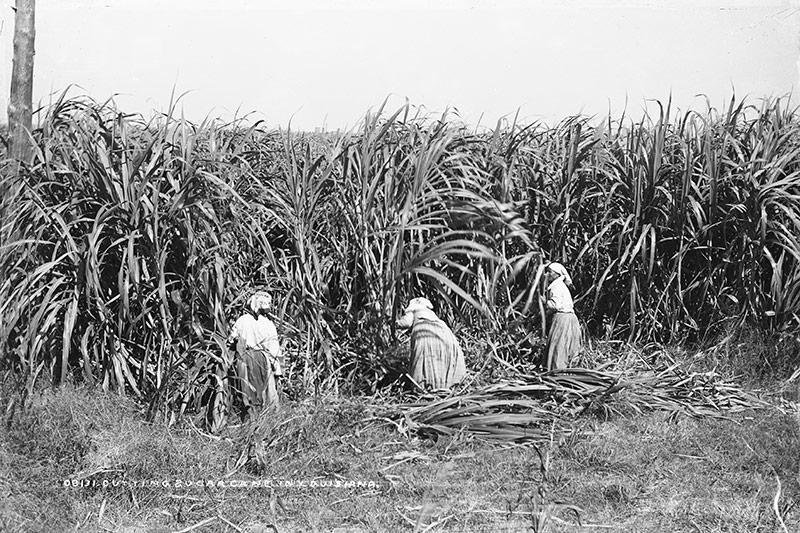
In November 1887, approximately 10,000 sugar plantation workers in southern Louisiana launched a strike demanding fairer wages and cash payments instead of plantation store scrip. Organized with the Knights of Labor, the strike affected several sugar-producing parishes. After workers and their families were evicted from plantation housing, many gathered in Thibodaux. Around November 22–23, armed white vigilantes attacked African American workers and residents, killing dozens. The exact death toll remains disputed. The Thibodaux Massacre exposed the violent suppression of Black labor organizing after emancipation and remains an important chapter in American labor and civil rights history.

LGBTQ+ rights

thibodaux-massacre-louisiana-sugar-strike-1887

https://dl.dropboxusercontent.com/scl/fi/l0udr77x300t675fz3ev7/thibodaux-massacre-1887-labor-rights-narration.mp3?rlkey=1z5a223dfm8r5j6nc114yul0p&st=enf497bh&dl=0

Nugent House — Black Women's Suffrage Historic Site

Ishimwe K.

Louisville, Kentucky

In June 1919, African American suffragists Georgia and Alice Nugent purchased a home at 845 South 6th Street in Louisville, Kentucky. The house became a gathering place for Black women's civic organizations advocating voting rights, educational opportunities, racial equality, and community welfare. The sisters helped lead Louisville's Woman's Improvement Club and the Kentucky Association of Colored Women's Clubs. Their organizing continued through the ratification of the Nineteenth Amendment in 1920, when many Black women still faced racial barriers to voting. The Nugent House was added to the National Register of Historic Places in 2020, preserving the legacy of their advocacy.

LGBTQ+ rights

nugent-house-georgia-alice-nugent-womens-suffrage

https://dl.dropboxusercontent.com/scl/fi/f6ggrocpayflbi6ai2bxl/nugent-house-georgia-alice-nugent-suffrage-narration.mp3?rlkey=o3h4b7pa93cswpgkcgew9n0vn&st=e06euycg&dl=0

Kentucky Coal Museum — Harlan County Coal Labor History

Ishimwe K.

Benham, Kentucky

In 1931–1932, coal miners and their families in Harlan and Bell Counties, Kentucky, struggled against low wages, unemployment, evictions, and opposition to labor unions. The conflict escalated on May 5, 1931, when a gun battle near Evarts left four people dead. After the United Mine Workers of America withdrew support, the National Miners Union helped some miners continue organizing and obtain relief. Violence and intimidation attracted national attention, including an investigation by prominent writers whose findings appeared in Harlan Miners Speak in 1932. The strikes became an important chapter in Appalachian labor history and the struggle for collective bargaining rights.

LGBTQ+ rights

harlan-county-coal-miners-strike-1931-1932

https://dl.dropboxusercontent.com/scl/fi/drw3bco8j8zv2z9bqvp8v/harlan-county-coal-miners-strike-1931-1932-narration.mp3?rlkey=dm5j5eq8t6jbtypk9z9trut1o&st=6zurnf0i&dl=0

Susanna Salter House — First Woman Mayor Historic Site

Tara M.

Argonia, Kansas

On April 4, 1887, Susanna Madora Salter became the first woman elected mayor in the United States when voters in Argonia, Kansas, gave her approximately two-thirds of the vote. Just weeks after Kansas women gained municipal voting rights, local men placed her name on the ballot as a joke intended to embarrass women involved in politics. Instead, voters elected the 27-year-old civic leader. Salter served a one-year term and demonstrated women's ability to hold elected office. Her preserved home in Argonia commemorates this important milestone in women's political equality and American history.

LGBTQ+ rights

susanna-madora-salter-first-woman-mayor-1887

https://dl.dropboxusercontent.com/scl/fi/7pncy1xaddkife7fr2836/susanna-madora-salter-1887-narration.mp3?rlkey=79nl9qchqa0i5cl9zfkwse7ck&st=kvhqhdc7&dl=0

Miners Hall Museum — Historic Amazon Army March Starting Sit

Tara M.

Pittsburg, Kansas

On December 12–14, 1921, thousands of women from coal-mining families marched through southeast Kansas to support striking miners and challenge restrictions on organized labor. Beginning near Franklin, the wives, mothers, sisters, and daughters of miners blocked entrances to coal mines and confronted replacement workers. Known nationally as the "Amazon Army," the movement protested poor wages, difficult living conditions, and Kansas's Court of Industrial Relations system. Governor Henry J. Allen mobilized the National Guard to restore order. The protests became an important example of women's leadership in labor organizing and the struggle for workers' rights.

LGBTQ+ rights

amazon-army-womens-labor-protest-1921

https://dl.dropboxusercontent.com/scl/fi/mdd73koyuphevwsfdfg35/amazon-army-kansas-1921-narration.mp3?rlkey=vu7og6d9wb28fxdky2kc2qgp6&st=m5tagdqy&dl=0

Belle Babb Mansfield — Votes for Women Historical Marker

Jordyn V.

Mount Pleasant, Iowa

On June 15, 1869, Arabella “Belle” Babb Mansfield became the first woman admitted to the practice of law in the United States after passing the Iowa bar examination in Mount Pleasant. Although Iowa's licensing law specified white male applicants, Judge Francis Springer interpreted the law to permit her admission. Mansfield had prepared through legal study in her brother's office and demonstrated exceptional knowledge before the examiners. Iowa removed the discriminatory statutory language in 1870. Mansfield went on to become an educator and women's suffrage advocate, helping advance women's professional opportunities and political equality. A historical marker in Mount Pleasant commemorates her legacy.

LGBTQ+ rights

arabella-mansfield-first-woman-us-bar-1869

https://dl.dropboxusercontent.com/scl/fi/5htk9yzjboell0ya5ch5h/arabella-mansfield-1869-bar-admission-narration.mp3?rlkey=2hgszgyxobhrvy8nc4uzkel9m&st=qse0a5az&dl=0

Meskwaki Settlement — 1857 Land Reclamation Heritage

Jordyn V.

Tama County, Iowa

On July 13, 1857, the Meskwaki Nation reclaimed part of its ancestral homeland by purchasing 80 acres of land in Tama County, Iowa, for $1,000. After forced removal to Kansas in the 1840s, Meskwaki families continued returning to Iowa and secured state permission to reside there in 1856. Their land purchase established the foundation of the Meskwaki Settlement, a community built through tribal ownership rather than a conventional federally established reservation. Over time, the Nation expanded its landholdings and strengthened its self-government. Today, the 1857 purchase is commemorated annually as Meskwaki Nation Day, honoring Indigenous resilience, land rights, and tribal sovereignty.

LGBTQ+ rights

meskwaki-nation-historic-land-reclamation-1857

https://dl.dropboxusercontent.com/scl/fi/mio0m1jq5pf8ghz80v0lz/meskwaki-1857-land-reclamation-narration.mp3?rlkey=bvep7y4ry5fmnmy87zeb94gvq&st=lke0us2b&dl=0

J. Chester and Elizabeth Allen Historical Marker — Former Law Office

Emmett D.

South Bend, Indiana

In 1939, African American attorneys J. Chester and Elizabeth Fletcher Allen established a law practice in South Bend, Indiana, and became influential advocates for civil rights. Elizabeth worked with the NAACP, challenged discriminatory housing and educational practices, and created a Red Cross nurse's aide training and placement program for Black women. Elected to the Indiana legislature in 1938 and 1940, J. Chester fought employment discrimination and expanded access to wartime defense jobs. He also helped lead the campaign to desegregate the Engman Public Natatorium in 1950. A historical marker at their former law office honors their contributions to racial equality.

LGBTQ+ rights

j-chester-elizabeth-allen-civil-rights-south-bend

https://dl.dropboxusercontent.com/scl/fi/jag8ip1axe8wbff2juz4d/j-chester-elizabeth-allen-south-bend-civil-rights-narration.mp3?rlkey=mhvzygvjwo38eyn2p3zx3ssup&st=xtxubwmx&dl=0

Union Literary Institute — Historic School Site and Marker

Emmett D.

Union City, Indiana

Founded in 1846 by free African Americans and antislavery Quakers in Randolph County, Indiana, the Union Literary Institute provided education to Black and white students of both sexes at a time when Black children were excluded from Indiana's public schools. Students could work four hours daily in exchange for room and board. The institute also served as a refuge on the Underground Railroad, offering shelter and educational opportunities to people escaping slavery. Its legacy includes notable students James S. Hinton and Hiram Revels. A state historical marker now commemorates this pioneering institution near Union City.

LGBTQ+ rights

union-literary-institute-1846-biracial-education

https://dl.dropboxusercontent.com/scl/fi/dtysv42ldcyzume8n0iwo/union-literary-institute-1846-narration.mp3?rlkey=tb8mf52508dyk8k6w4akt2x0l&st=l7amkrrp&dl=0

Dr. C. K. Ah Fong's Historic Chinatown Apothecary

Julia B.

Boise, Idaho

In 1899, Dr. Cheuck “C. K.” Ah Fong, a Chinese physician serving patients in Boise, Idaho, challenged the State Board of Medical Examiners after being denied permission to continue practicing medicine. His case arose amid anti-Chinese discrimination and restrictive licensing laws. On January 24, 1900, the Idaho Supreme Court reversed a lower court ruling and ordered further proceedings. Historical accounts indicate that Ah Fong ultimately received his medical license in 1901, becoming the first Chinese physician fully licensed in Idaho. His struggle represents an important chapter in Chinese American civil rights and professional equality.

LGBTQ+ rights

dr-ck-ah-fong-medical-licensing-discrimination-1899

https://dl.dropboxusercontent.com/scl/fi/9bk6p1yji3udxdvkvn5zf/idaho-ck-ah-fong-medical-rights-narration.mp3?rlkey=jsqsbeou550vdbyowfmmf6oqh&st=qpdty4ib&dl=0

Historic Teton County Courthouse — 1935 Pea Pickers Strike

Julia B.

Driggs, Idaho

In August 1935, approximately 1,500 Mexican and Mexican American pea pickers in Teton Valley near Driggs, Idaho, went on strike over low wages and unfair labor practices. Workers challenged a payment system offering seventy cents per hundred pounds of peas plus a conditional fifteen-cent bonus, demanding a guaranteed dollar per hundred pounds instead. After tensions between workers, growers, and local authorities escalated, Governor C. Ben Ross deployed the Idaho National Guard. Troops detained and removed strike participants, bringing the walkout to an end without the workers securing their demands. The strike remains an important chapter in Mexican American labor organizing and agricultural workers' civil rights in Idaho.

LGBTQ+ rights

driggs-mexican-pea-pickers-strike-1935

https://dl.dropboxusercontent.com/scl/fi/ko8ub5e5mj9n1npsr2we0/driggs-mexican-pea-pickers-strike-1935-narration.mp3?rlkey=t7aak7e89fcrezjzrx6pbovrp&st=zc1za5o3&dl=0

Honolulu, Hawaiʻi

Celeste K.

Celeste K.

Japanese Cultural Center of Hawaiʻi — Farrington v. Tokushige Educational Legacy

LGBTQ+ rights

farrington-v-tokushige-1927-japanese-language-school-rights

https://dl.dropboxusercontent.com/scl/fi/zjrqxw2jjqekx76ft2fkl/farrington-v-tokushige-1927-language-school-rights-narration.mp3?rlkey=in1z5hi834rggkcxh1387jnc9&st=351g0r2l&dl=0

Hawaiʻi's Plantation Village — 1946 Sugar Strike Legacy

Celeste K.

Waipahu, Hawaiʻi

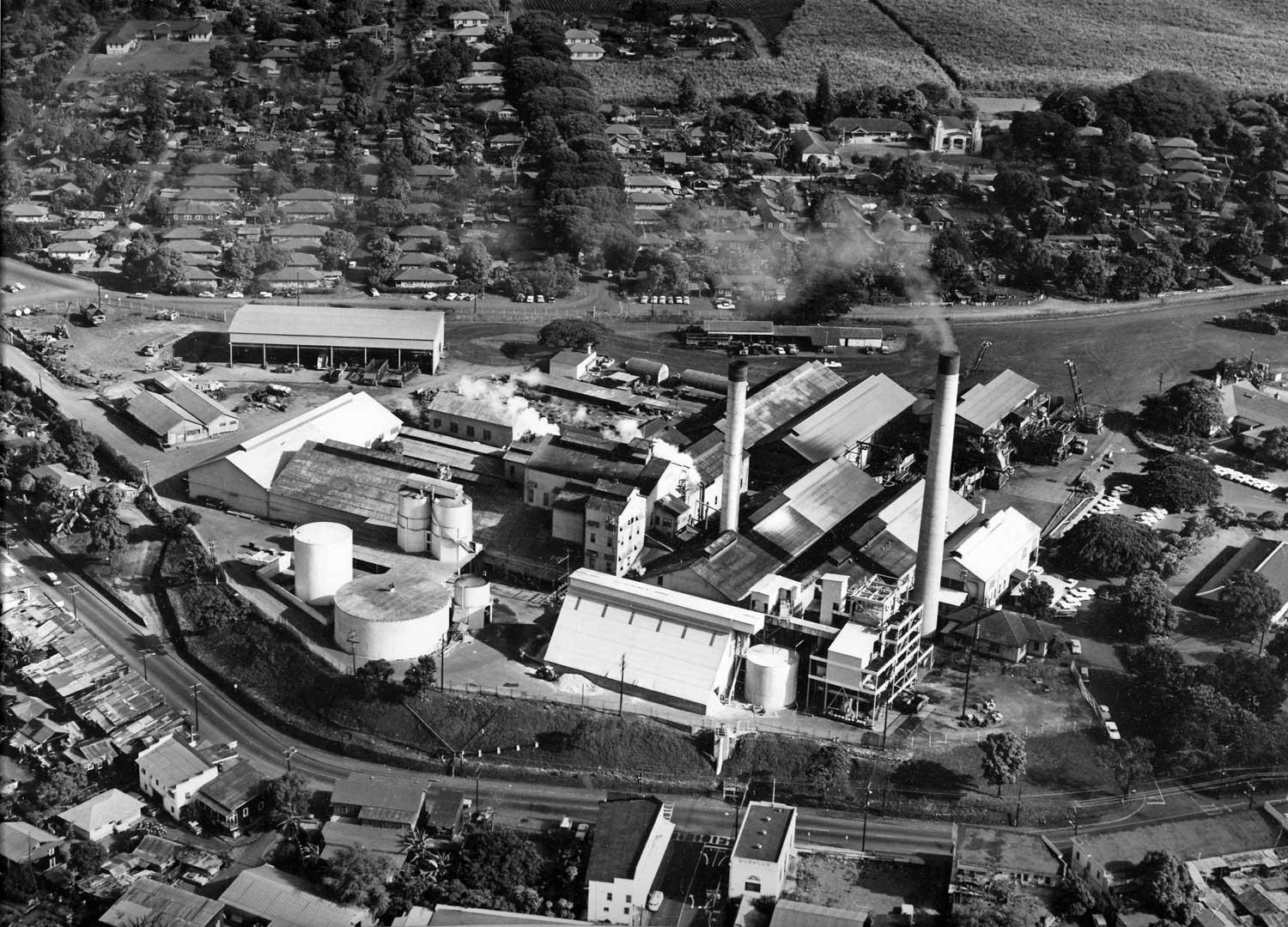
On September 1, 1946, approximately 26,000 sugar plantation workers across Hawaiʻi began a 79-day strike organized by the International Longshore and Warehouse Union (ILWU). Workers from Filipino, Japanese, Chinese, Native Hawaiian, Portuguese, and other communities united to demand higher wages, fair working conditions, and an end to discriminatory plantation practices. The strike shut down 33 of the territory's 34 sugar plantations. Through picket lines, community kitchens, and family support networks, workers sustained their movement until a November settlement secured significant gains. The 1946 strike transformed labor relations and strengthened multiethnic solidarity in Hawaiʻi.

LGBTQ+ rights

1946-hawaii-sugar-strike-plantation-workers-rights

https://dl.dropboxusercontent.com/scl/fi/z19vt7r2samu3cvae84if/hawaii-1946-sugar-strike-narration.mp3?rlkey=my4t5yjk6fdamq02rarqdqv43&st=emh2p8na&dl=0

Leesburg Stockade — Georgia Civil Rights Trail

Emma A.

Leesburg, Georgia

In July 1963, African American girls participating in civil rights demonstrations in Americus, Georgia, were arrested and taken to the Leesburg Stockade in Lee County. Some were as young as twelve. The girls were detained without formal charges in an overcrowded cell with inadequate water, sanitation, and bedding, while their families initially did not know where they were held. Photographer Danny Lyon of the Student Nonviolent Coordinating Committee documented their conditions, and the resulting national publicity helped secure their release in September 1963. A Georgia Civil Rights Trail marker now honors their courage and contributions to the struggle against segregation.

LGBTQ+ rights

leesburg-stockade-girls-1963-civil-rights

https://dl.dropboxusercontent.com/scl/fi/60rrp8sfyh7z8poz7gmb5/leesburg-stockade-girls-1963-narration.mp3?rlkey=tyu9frf7idn1osro89lk3bwlk&st=n36gyojm&dl=0

Primus King and the Civil Rights Movement Historical Marker

Emma A.

Columbus, Georgia

On July 4, 1944, Primus E. King, an African American barber, minister, and registered voter in Columbus, Georgia, attempted to vote in the Democratic primary at the Muscogee County Courthouse. Election officials denied him a ballot solely because of his race. Supported by civil rights organizer Dr. Thomas H. Brewer and local attorneys, King challenged the exclusion in federal court. On October 12, 1945, the court ruled in his favor, and the Fifth Circuit Court of Appeals upheld the decision on March 6, 1946. The case helped end Georgia's all-white Democratic primaries and advance African American voting rights.

LGBTQ+ rights

primus-e-king-georgia-white-primary-voting-rights

https://dl.dropboxusercontent.com/scl/fi/ajatpacchcj2lgosai2rg/primus-e-king-white-primary-1944-1946-narration.mp3?rlkey=e4uwmhsnswkb7mh4ipz9mgt94&st=d6gpl7gl&dl=0

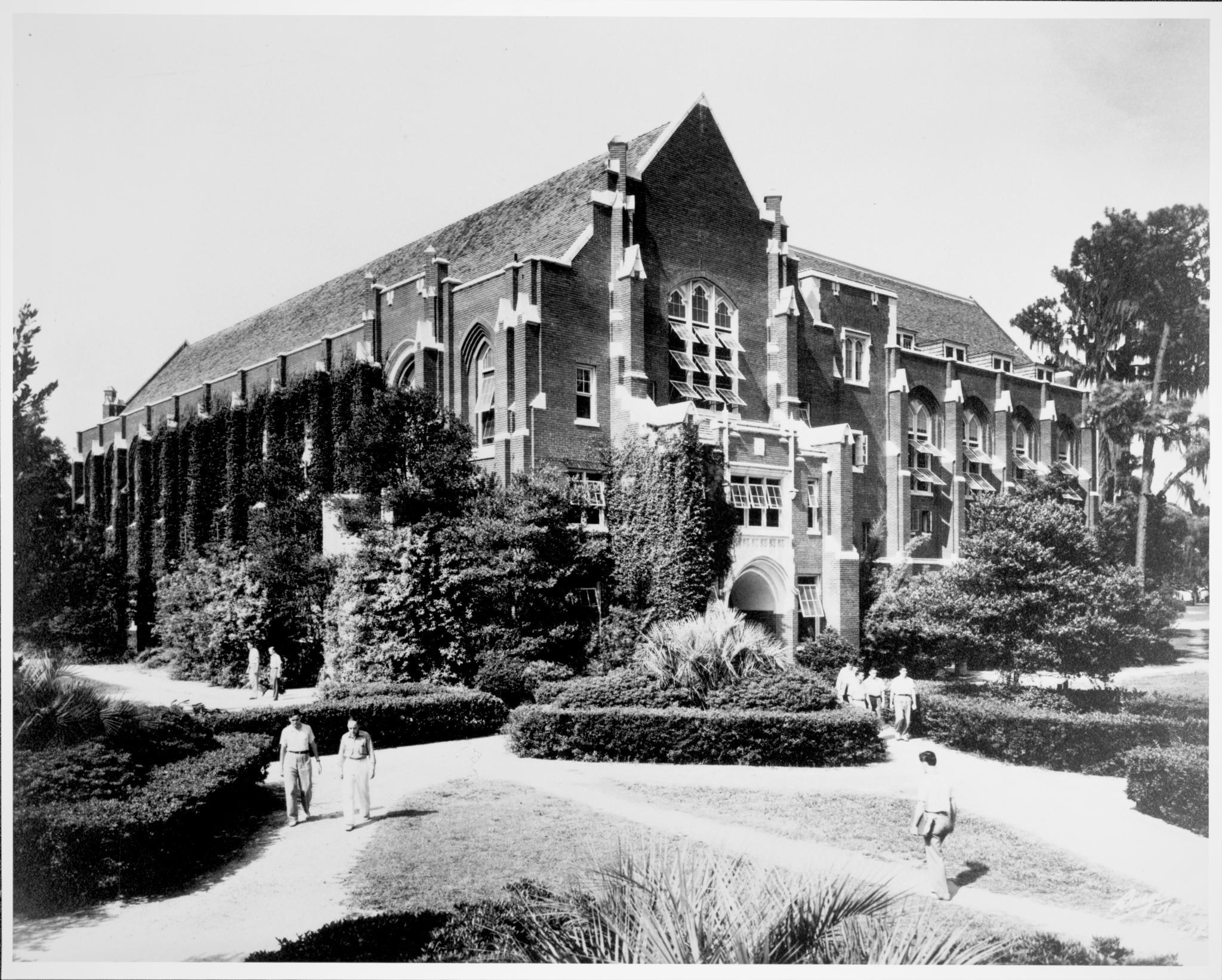
University of Florida — Johns Committee Investigations and Archives

Isabella M.

Gainesville, Florida

From 1956 to 1965, Florida's Johns Committee investigated civil rights activists, students, and educators accused of subversive activities. Beginning in 1958, the committee targeted suspected gay students and faculty at the University of Florida in Gainesville. Investigators conducted surveillance and interrogations that led to the departure of at least 15 professors and more than 50 students. In 1964, the committee published the controversial report Homosexuality and Citizenship in Florida, known as the Purple Pamphlet. Public criticism contributed to the committee's dissolution in 1965. The investigations remain an important chapter in LGBTQ+ rights, civil liberties, and academic freedom.

LGBTQ+ rights

johns-committee-investigations-1956-1965

https://dl.dropboxusercontent.com/scl/fi/hyx9w3vy1r72apug1fcee/johns-committee-investigations-1956-1965-narration.mp3?rlkey=rexx484pnkffjgll7vcmco8m7&st=o4l4961t&dl=0

Birthplace for Equal Suffrage for Women in Florida — Historical Marker

Isabella M.

Fellsmere, Florida

In 1915, Fellsmere became the first municipality in Florida to grant women equal voting rights in local elections. Residents approved a town charter containing a provision for women's suffrage, and Governor Park Trammell signed the incorporation law on May 12, 1915. That June, Zena M. Dreier became the first woman recorded to vote in a Fellsmere municipal election, years before the Nineteenth Amendment was ratified nationally. A historical marker on North Broadway commemorates this breakthrough in women's voting rights and Fellsmere's role in the wider suffrage movement.

LGBTQ+ rights

fellsmere-womens-voting-rights-1915

https://dl.dropboxusercontent.com/scl/fi/rozvv19d4k4xggq2mc8g8/fellsmere-womens-suffrage-1915-narration.mp3?rlkey=nc8tb49b459cz8eiykw4as6th&st=mw4uqxkb&dl=0

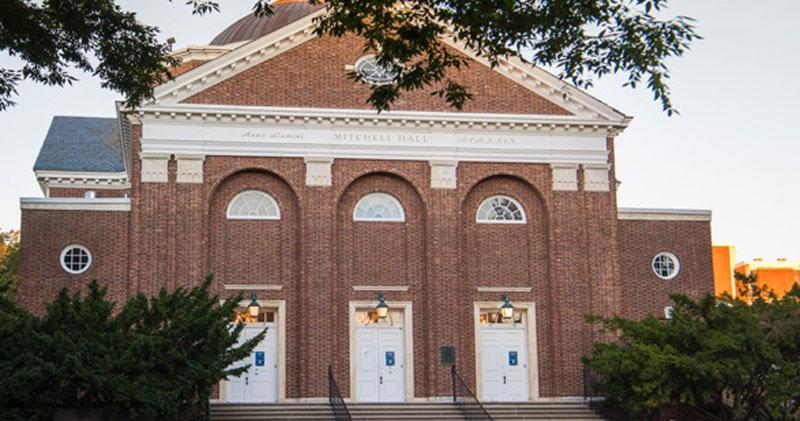
Mitchell Hall — Richard Aumiller Free Speech Case

Zanthia O.

Newark, Delaware

On June 21, 1977, a federal court ruled in favor of Richard B. Aumiller, a gay theater lecturer at the University of Delaware, after university officials declined to renew his contract because of public comments about homosexuality. Aumiller had served as faculty advisor to the campus Gay Community and spoken to newspapers about LGBTQ+ issues. In 1975, one of those interviews took place in his office in Mitchell Hall. The court found that the nonrenewal violated his First Amendment right to free expression. The case became an important victory for LGBTQ+ advocacy, academic freedom, and public employees' speech rights.

LGBTQ+ rights

aumiller-v-university-of-delaware-1977

https://dl.dropboxusercontent.com/scl/fi/ld3o685k9g14t2r6lumxg/aumiller-university-delaware-1977-narration.mp3?rlkey=thcsafttlazo8yn9gfrqzxjut&st=jvjib7gb&dl=0

Old Claymont High School — Belton v. Gebhart

Zanthia O.

Claymont, Delaware

In 1951, African American families in Claymont and Hockessin, Delaware, challenged unequal public education in the cases Belton v. Gebhart and Bulah v. Gebhart. Ethel Louise Belton and other students sought admission to Claymont High School, while Sarah Bulah fought for her daughter Shirley's access to a better school and equal transportation. On April 1, 1952, Chancellor Collins J. Seitz ordered the Black students admitted to formerly white schools because their existing educational facilities were unequal. The Delaware Supreme Court upheld the ruling. These cases became Delaware's contribution to the landmark 1954 Brown v. Board of Education decision.

LGBTQ+ rights

belton-bulah-v-gebhart-delaware-school-desegregation

https://dl.dropboxusercontent.com/scl/fi/z3jlaeine1o2xghaail3w/belton-bulah-gebhart-delaware-1952-narration.mp3?rlkey=1rec6xss8q7vy02llhcnhp2ld&st=fo8n5jmk&dl=0

Connecticut State Capitol — 1991 Gay Rights Law

Charlie S.

Hartford, Connecticut

On May 1, 1991, Connecticut Governor Lowell P. Weicker Jr. signed Public Act 91-58, prohibiting discrimination based on sexual orientation in employment, housing, public accommodations, and credit. The law followed eighteen years of campaigning, legislative defeats, and demonstrations by LGBTQ+ civil rights advocates. In 1987 and 1989, supporters protested at the Connecticut State Capitol after proposed protections failed. The 1991 legislation made Connecticut one of the earliest states to establish statewide sexual-orientation anti-discrimination protections, marking an important milestone in the struggle for LGBTQ+ equality.

LGBTQ+ rights

connecticut-gay-rights-law-public-act-91-58-1991

https://dl.dropboxusercontent.com/scl/fi/v4g2y1p747sa76t9fkgzx/connecticut-gay-rights-law-1991-narration.mp3?rlkey=m4gifrl7lbfqsac3vtgz4fylm&st=ry6e0lfn&dl=0

Prudence Crandall Museum — Canterbury Female Boarding School

Charlie S.

Canterbury, Connecticut

In April 1833, educator Prudence Crandall reopened the Canterbury Female Boarding School in Connecticut for Black girls, following the admission of Sarah Harris the previous year. The school challenged racial discrimination in education and attracted students from several states. Local opponents organized boycotts, and Connecticut passed the 1833 Black Law restricting the education of out-of-state Black students. Crandall was arrested and prosecuted, but continued teaching. After a violent mob attack in September 1834, the school closed. The original building is now the Prudence Crandall Museum, preserving this landmark struggle for racial and educational equality.

LGBTQ+ rights

prudence-crandall-museum-canterbury-boarding-school

https://dl.dropboxusercontent.com/scl/fi/iujuyjdobgrb427o82mcr/prudence-crandall-boarding-school-1833-1834-narration.mp3?rlkey=n6lx0gfwx0wx217x5d9942ajk&st=9bkbs1t2&dl=0

Colorado Women's Suffrage Association Historical Marker

Christa T.

Denver, Colorado

On November 7, 1893, Colorado voters approved a landmark referendum granting women the right to vote in state elections. The measure passed with 35,798 votes in favor and 29,551 opposed, making Colorado the first U.S. state to adopt women's suffrage through a popular referendum. Activists including Carrie Chapman Catt, Ellis Meredith, and Minnie J. Reynolds supported a statewide campaign of speeches, newspaper articles, and community organizing. A historical marker at 17th and California Streets in Denver commemorates the earlier women's suffrage association whose organizing helped lay the foundations for this victory.

LGBTQ+ rights

colorado-womens-suffrage-referendum-1893

https://dl.dropboxusercontent.com/scl/fi/dppioeal9896zg3rzxry8/colorado-womens-suffrage-1893-narration.mp3?rlkey=9z4169m0pn3uf0951a95tlvpz&st=efd77ylm&dl=0

Gang of 19 Disability Rights Protest — Colfax Avenue & Broadway

Christa T.

Denver, Colorado

On July 5–6, 1978, nineteen disability rights activists known as the Gang of 19 blocked two Regional Transportation District buses at Colfax Avenue and Broadway in Denver, Colorado. Members of the Atlantis Community demanded wheelchair-accessible public transportation, chanting "We will ride!" during a roughly 24-hour protest. Their direct action drew public attention to discrimination against people with disabilities and helped secure commitments to improve bus accessibility. The protest became an influential milestone in the American independent living and disability rights movements, helping inspire the nationwide organizing efforts of ADAPT.

LGBTQ+ rights

gang-of-19-denver-accessible-bus-protest-1978

https://dl.dropboxusercontent.com/scl/fi/ajcv5z5dpmldqtuoraps4/gang-of-19-denver-bus-protest-1978-narration.mp3?rlkey=b5dhn7jvw4xq2x9uoy3jcxoll&st=e20jnnnp&dl=0

Ed Roberts Campus — Center for Independent Living Legacy

Isabella H.

Berkeley, California

In 1972, disability rights activist Ed Roberts and fellow advocates established the Center for Independent Living in Berkeley, California. Growing out of the University of California, Berkeley's Physically Disabled Students Program, the center promoted independent living, accessibility, equal opportunities, and control over personal decisions for people with disabilities. Organized and operated by disabled people themselves, it became a model for independent living centers across the United States and internationally. Today, the Ed Roberts Campus preserves this legacy by providing accessible space for disability services and advocacy organizations.

LGBTQ+ rights

ed-roberts-center-for-independent-living-1972

https://dl.dropboxusercontent.com/scl/fi/omgr6pw5vm8pjmedtk7sh/ed-roberts-center-independent-living-1972-narration.mp3?rlkey=cv1cm3w4j40z5cmapv8m48zht&st=4nuv3rsf&dl=0

Site of the Wheatland Hop Riot of 1913 — Durst Hop Ranch

Isabella H.

Wheatland, California

On August 3, 1913, a confrontation between striking agricultural workers and law enforcement at the Durst Hop Ranch near Wheatland, California, left four people dead and many injured. Thousands of migrant hop pickers had faced low wages, overcrowded camps, inadequate drinking water, and unsanitary living conditions. Workers supported by the Industrial Workers of the World demanded improvements, but their protests escalated into violence. The Wheatland Hop Riot brought statewide attention to the treatment of farm laborers and helped prompt investigations, labor camp reforms, and greater awareness of agricultural workers' rights.

LGBTQ+ rights

wheatland-hop-riot-1913-agricultural-workers-rights

https://dl.dropboxusercontent.com/scl/fi/03leapo2autaiwh1y8ldd/wheatland-hop-riot-1913-narration.mp3?rlkey=4fafeut8eaz6dwfaqbji3usn3&st=urq71ebp&dl=0

Hoxie Public Schools — 1955 School Desegregation

Eddie Gramling

Hoxie, Arkansas

On July 11, 1955, twenty-one African American children attended previously all-white public schools in Hoxie, Arkansas, following a unanimous decision by the local school board to end segregation. Superintendent K. E. Vance supported integration as morally right, legally required, and financially practical. Although classes initially proceeded peacefully, national publicity brought segregationist protests, boycotts, and threats. The school board defended integration in federal court, securing an injunction against interference and a favorable appeals court ruling in October 1956. Hoxie's stand became an important early victory for educational equality in Arkansas.

LGBTQ+ rights

desegregation-of-hoxie-schools-1955

https://dl.dropboxusercontent.com/scl/fi/871jyx3at787ic2t90ky9/hoxie-school-desegregation-1955-narration.mp3?rlkey=9pnmzf72cvtnm5pg98jwc3h6q&st=38ilwnod&dl=0

Southern Tenant Farmers Museum — Historic Mitchell-East Building

Eddie Gramling

Tyronza, Arkansas

In July 1934, seven Black and eleven white tenant farmers and sharecroppers formed the Southern Tenant Farmers Union near Tyronza, Arkansas. The interracial organization challenged unfair cotton payments, evictions, and the exploitation of agricultural workers during the Great Depression. Organizers H. L. Mitchell and Clay East used their businesses in Tyronza as the union's early headquarters. Despite intimidation and violence, the union expanded and became an important forerunner of later civil rights and farm labor movements. Today, the restored Mitchell-East Building houses the Southern Tenant Farmers Museum, which opened in 2006.

LGBTQ+ rights

southern-tenant-farmers-union-museum-1934

https://dl.dropboxusercontent.com/scl/fi/rmez5ie0pe9dn0biiytm4/southern-tenant-farmers-union-1934-narration.mp3?rlkey=w5p0490p1ombd1sj4po1prckk&st=809y104r&dl=0

George Washington Carver High School — 1953 School Desegregation

Juni Spielman

Phoenix, Arizona

In 1952, African American families challenged school segregation in Phoenix, Arizona, after three Black students were denied admission to Phoenix Union High School. Attorneys Hayzel B. Daniels and Herbert B. Finn brought Phillips v. Phoenix Union High Schools and Junior College District to court. On February 9, 1953, Judge Fred C. Struckmeyer Jr. ruled that the district's racial segregation was illegal. The decision came more than a year before Brown v. Board of Education. George Washington Carver High School, built in 1926 as a segregated school for Black students, closed in 1954 following desegregation.

LGBTQ+ rights

carver-high-school-phillips-v-phoenix-union-1953

https://dl.dropboxusercontent.com/scl/fi/o2to9aj3y80kgicj50axm/carver-high-school-phillips-1953-narration.mp3?rlkey=kzkok1j6qr7y0xyez4qp2qm78&st=vq0jtuuc&dl=0

Harrison v. Laveen — 1948 Native American Voting Rights Case

Juni Spielman

Phoenix, Arizona

On July 15, 1948, the Arizona Supreme Court issued its landmark decision in Harrison v. Laveen, advancing Native American voting rights. Frank Harrison and Harry Austin, members of the Fort McDowell tribal community, had challenged Maricopa County Recorder Roger G. Laveen after he refused to register them to vote. The court overturned its 1928 ruling that had treated reservation Indians as people under guardianship and therefore ineligible to vote. The victory removed a major legal barrier, although discriminatory literacy tests and other obstacles continued.

LGBTQ+ rights

harrison-v-laveen-1948-native-american-voting-rights

https://dl.dropboxusercontent.com/scl/fi/fj1i3247wahiq4jk75j2l/harrison-v-laveen-1948-voting-rights-narration.mp3?rlkey=ourhw7l5s9gsqxkaxkhike8qc&st=2ue8oa2y&dl=0

1922 Wrangell Polling Place — Tillie Paul Tamaree and Charlie Jones

Harley G.

Wrangell, Alaska

On November 7, 1922, Tlingit leader Charlie Jones was initially denied the right to vote in Wrangell, Alaska. Fellow Tlingit educator and activist Tillie Paul Tamaree challenged the election officials and helped Jones cast his ballot. Both were subsequently prosecuted, with Jones accused of illegal voting and perjury and Tamaree charged with inducing an Alaska Native to vote. In October 1923, attorney William Paul, Tamaree's son, successfully defended Jones in Ketchikan. The jury found Jones not guilty, and the charges against Tamaree were dismissed, marking an important victory in the fight for Alaska Native voting rights.

LGBTQ+ rights

tillie-paul-tamaree-charlie-jones-voting-rights-1922-1923

https://dl.dropboxusercontent.com/scl/fi/qnuaxlgz6skwxhq9vvr6k/tillie-paul-charlie-jones-voting-rights-narration.mp3?rlkey=4o0p2qcdraaptlrhqkjgn49j9&st=p6qq3qvc&dl=0

Funter Bay Unangax̂ Internment Camps — Cannery and Gold Mine

Harley G.

Funter Bay, Alaska

In June 1942, the U.S. government forcibly evacuated Unangax̂ (Aleut) communities from Alaska's Aleutian and Pribilof Islands during World War II. Residents of St. Paul and St. George arrived at Funter Bay on June 24, 1942, and were confined in an abandoned cannery and a former gold mine camp. Inadequate housing, poor sanitation, illness, and limited medical care caused great suffering and loss of life. The Funter Bay camps became significant sites in the history of Indigenous civil rights, wartime displacement, and the struggle for federal accountability.

LGBTQ+ rights

unangax-aleut-wwii-evacuation-internment-funter-bay

https://dl.dropboxusercontent.com/scl/fi/lghqgz6zlrf6oiwqqk7iz/unangax-funter-bay-wwii-internment-narration.mp3?rlkey=ahgrlm8ffqr1mptzf9by8llcm&st=vgqf2puz&dl=0

Poarch Consolidated Schoolhouse — Poarch Creek Educational Equality

Regina B.

Poarch, Alabama

The Poarch Band of Creek Indians in southern Alabama fought racial discrimination and unequal educational opportunities while preserving their identity as a Native American community. In 1949, the Poarch Consolidated School provided segregated education only through sixth grade. Community members successfully pressed local authorities to provide transportation so Creek children could continue to junior high and high school. Under leaders including Calvin McGhee and Eddie L. Tullis, the Tribe also pursued federal recognition, achieved on August 11, 1984. Their history represents an important struggle for Indigenous educational equality, tribal sovereignty, and civil rights.

LGBTQ+ rights

poarch-band-creek-indians-school-equality-federal-recognition

https://dl.dropboxusercontent.com/scl/fi/r5h3nemh31uvz4bqnvrik/poarch-creek-school-equality-federal-recognition.mp3?rlkey=2c9fkxn9zdd4otvnp91whaqw5&st=74d9p14y&dl=0

Historic Bryce Hospital — Wyatt v. Stickney

Regina B.

Tuscaloosa, Alabama

In 1970, patients at Bryce Hospital in Tuscaloosa, Alabama, became the focus of Wyatt v. Stickney, a landmark disability rights lawsuit. The case challenged inadequate care and institutional conditions. In 1971 and 1972, federal judge Frank M. Johnson Jr. ruled that involuntarily committed patients had a right to adequate treatment and established minimum standards for humane conditions, qualified staffing, and individualized care. The case helped transform legal protections for people with mental illnesses and developmental disabilities.

LGBTQ+ rights

wyatt-v-stickney-disability-rights-bryce-hospital

https://dl.dropboxusercontent.com/scl/fi/7jlz5vh8igkw6aspuagih/wyatt-v-stickney-bryce-hospital-narration.mp3?rlkey=o36ie3ardrs1z707qvfq80ux4&st=vbhcnr0x&dl=0

Kohler Company Factory Complex — 1934 Workers' Strike

Stella K.

Kohler, Wisconsin

On July 16, 1934, workers at the Kohler Company in Kohler, Wisconsin, began a strike demanding independent union recognition and collective bargaining rights. On July 27, a violent confrontation between strikers and armed deputies left two workers dead and 47 wounded. The dispute continued until April 1941, when the company agreed to rehire striking workers without recognizing their union. The strike became a significant event in Wisconsin's labor rights history.

LGBTQ+ rights

kohler-workers-strike-and-labor-rights-conflict-1934

https://dl.dropboxusercontent.com/scl/fi/blp42p10yp3g3u7zhdotf/kohler-workers-strike-1934-narration.mp3?rlkey=wj37754aw1hifrc5dt0ko5md3&st=7l7et6yv&dl=0

Dempsey Hall — Black Thursday and the Oshkosh 94

Stella K

Oshkosh, Wisconsin

On November 21, 1968, 94 African American students at Wisconsin State University–Oshkosh protested racial discrimination by entering the university president's offices in Dempsey Hall. The students demanded equal treatment, more Black faculty, and better educational opportunities. The protest led to arrests and disciplinary expulsions and suspensions. Known as "Black Thursday," this event became an important chapter in the struggle for racial and educational equality in Wisconsin.

LGBTQ+ rights

black-thursday-oshkosh-94-student-protest-1968

https://dl.dropboxusercontent.com/scl/fi/yilkyav5a3gpxdyw7bgm6/black-thursday-oshkosh-94-narration.mp3?rlkey=eicmam3o8y4l1p4r0oqr8qkkx&st=o6mcfjz7&dl=0

Mary McLeod Bethune Council House

Shan

Washington, DC

This historic townhouse was the home of civil rights leader Mary McLeod Bethune and the first national headquarters of the National Council of Negro Women. It became an important place where Black women organized to fight discrimination and improve education, employment, and voting opportunities.

African American Women's Rights & Civil Rights

mary-mcleod-bethune-council-house

https://dl.dropboxusercontent.com/scl/fi/5w4vgwmemr2ydaoiidlkd/Mary_McLeod_Bethune_Council_House.mp3?rlkey=eh3rg1vcsy0jr1kwa1vibnr8b&st=l6dujeft&dl=0

U Street — 1968 Civil Rights Uprising

Shan

Washington, DC

The intersection of 14th and U Streets NW became an important site of civil unrest after the assassination of Martin Luther King Jr. in April 1968. The events reflected anger over racism and unequal treatment and led to years of rebuilding in one of Washington's most important African American neighborhoods.

Civil Rights Uprising & Racial Equality

u-street-1968-civil-rights-uprising

https://dl.dropboxusercontent.com/scl/fi/0mr34s6po3prhgf3sbetm/U_Street_1968_Civil_Rights_Uprising.mp3?rlkey=j17deex894mdaiivc64nz2202&st=rztjdswj&dl=0

Cedar Hill: Frederick Douglass House

Shan

Washington, DC

Cedar Hill was the home of Frederick Douglass, a formerly enslaved man who became a leading advocate for African American civil rights and women's voting rights. He lived here during his later years, continuing his work for equal rights while many Black Americans faced growing discrimination.

African American Civil Rights & Women's Equality

cedar-hill-frederick-douglass-house

https://dl.dropboxusercontent.com/scl/fi/4qkpcmrvelgdwp3ve4qls/Cedar_Hill_Frederick_Douglass_House.mp3?rlkey=ljsjnmiru0faqijihjgimyk5c&st=1s9nzhh3&dl=0

U.S. Capitol

Shan

Washington, DC

The U.S. Capitol is the historic building where Congress passed the Civil Rights Act of 1964, a major law that challenged racial segregation and discrimination. The law helped protect equal treatment in public places, schools, and employment across the United States.

Civil Rights Legislation & Racial Equality

us-capitol-civil-rights-act-1964

https://dl.dropboxusercontent.com/scl/fi/io061vysnz6toj6i3ry9a/US_Capitol_Civil_Rights_Act_1964.mp3?rlkey=xcc713pppxjhpdczjwazu6kyw&st=xjk9ywkg&dl=0

Spirit of Freedom Statue

Shan

Washington, DC

The Spirit of Freedom Statue honors African American soldiers and sailors who fought for the Union during the Civil War and helped end slavery. Dedicated in 1998, the memorial recognizes their important role in the fight for freedom and equal rights.

African American Civil War History & Emancipation

spirit-of-freedom-statue

https://dl.dropboxusercontent.com/scl/fi/bwvhejl1656hqt6g9wh4h/Spirit_of_Freedom_Statue.mp3?rlkey=q625to88ggwupjdsc7ff3viaw&st=dk0en1d5&dl=0

The Lincoln Theatre

Shan

Washington, DC

The Lincoln Theatre is a historic performance venue that provided entertainment and cultural opportunities for African Americans during racial segregation. Opened in 1922, it became an important part of Washington's Black Broadway and helped celebrate Black music, artists, and community life.

African American Cultural History & Civil Rights

lincoln-theatre

https://dl.dropboxusercontent.com/scl/fi/rropjm8en93nj2s7trkh8/Lincoln_Theatre.mp3?rlkey=x4ypceocj1u14fagvweicm9fc&st=up3d40ox&dl=0

Charles Sumner School

Shan

Washington, DC

The Charles Sumner School is one of Washington's oldest surviving public school buildings built for African American students after the Civil War. Opened in 1872, it helped expand educational opportunities for Black children and became an important part of the fight for equal education.

African American Education & Civil Rights

charles-sumner-school

https://dl.dropboxusercontent.com/scl/fi/meode01cev88iohfndgwl/Charles_Sumner_School.mp3?rlkey=7k5cy241bz7y0ooz204phb42o&st=m3fz1g1v&dl=0

Black Lives Matter Plaza

Shan

Washington, DC

Black Lives Matter Plaza was a historic protest site near the White House where a large yellow street mural supported the fight against racism and police brutality. Created during the 2020 racial justice protests, the mural was removed in March 2025, but the location remains important to the history of the civil rights movement.

Racial Justice & Civil Rights

black-lives-matter-plaza

https://dl.dropboxusercontent.com/scl/fi/hhzshqpcq3o7ubt8j0a8v/Black_Lives_Matter_Plaza.mp3?rlkey=ccvx9pulyh911uii67xi943oz&st=1cn63gln&dl=0

The True Reformer Building

Shan

Washington, DC

The True Reformer Building is a historic building that became an important center for African American businesses and community organizations during segregation. Completed in 1903, it showed how Black Americans could build successful institutions despite racial discrimination.

African American Economic Independence & Civil Rights

true-reformer-building

https://dl.dropboxusercontent.com/scl/fi/9belvbf2mhjlc7883whmt/True_Reformer_Building.mp3?rlkey=h9gqfito461cn5hurdk1n8q4o&st=iqrjix8g&dl=0

Whitelaw Hotel

Shan

Washington, DC

The Whitelaw Hotel was one of Washington's first high-quality hotels built by and for African Americans during racial segregation. It provided Black travelers with a welcoming place to stay when many other hotels refused to serve them.

African American Housing & Civil Rights

whitelaw-hotel

https://dl.dropboxusercontent.com/scl/fi/x9iqr1mthtlpi8rjcs0jv/whitelaw-hotel.mp3?rlkey=0fi1wwppngu5qbbeg5jgvu82h&st=zgx00plz&dl=0

Duke Ellington Residence

Shan

Washington, DC

This historic rowhouse was the childhood home of Duke Ellington, one of America's most important jazz musicians. His career helped bring greater recognition to African American music and culture during a time of racial segregation.

African American Music & Cultural History

duke-ellington-residence

Alain Locke Residence

Shan

Washington, DC

This historic house was the home of Alain Locke, an important Black educator and writer who helped shape the Harlem Renaissance. His work encouraged Americans to respect Black culture, art, and equal opportunity.

African American Cultural History & Civil Rights

alain-locke-residence

https://dl.dropboxusercontent.com/scl/fi/oa059zfw4u3ipo9ip3ir3/Alain_Locke_Residence.mp3?rlkey=m3ggnhvce5edan972jey8cqzx&st=rysitfor&dl=0

Alma Thomas Residence

Shan

Washington, DC

The Alma Thomas Residence at 1530 15th Street NW in Washington, DC, was the longtime home and studio of pioneering African American artist and educator Alma Thomas. She became Howard University's first fine arts graduate and developed colorful abstract paintings that earned national recognition.

African American Art & Education

alma-thomas-residence

https://dl.dropboxusercontent.com/scl/fi/xv281lwcucoynm0hcax88/alma-thomas-residence.mp3?rlkey=83ud4bgmkbl8oua8g6btr7lno&st=oji95yec&dl=0

A. Philip Randolph Statue at Union Station

Shan

Washington, DC

Union Station has a bronze statue of A. Philip Randolph, who planned a huge march on Washington in 1941 to fight job discrimination. The threat of that march led President Roosevelt to ban discrimination in defense jobs. Copy Text

Labor & Civil Rights

a-philip-randolph-statue-union-station

https://dl.dropboxusercontent.com/scl/fi/7ft5cxcxdhr2bmdr9jgnl/A_Philip_Randolph_Statue_Union_Station.mp3?rlkey=ezv9zpnf1jzz63xcp6uyhblb5&st=y9fgzzn0&dl=0

The First Gay Rights Picket at the White House

Shan

Washington, DC

On April 17, 1965, a small group led by Frank Kameny walked a picket line in front of the White House to protest the federal government's discrimination against gay employees. It is widely considered the first organized gay rights picket at the White House. Copy Text

LGBTQ+ Rights

first-gay-rights-picket-white-house-1965

https://dl.dropboxusercontent.com/scl/fi/q1cf9zd15itifuaxzc73s/lafayette-square.mp3?rlkey=qjhpmkor5c4tmuxqxamaigguo&st=vd9lmw1j&dl=0

Martin Luther King Jr. Memorial

Shan

Washington, DC

The Martin Luther King Jr. Memorial in Washington, DC honors the life and legacy of Dr. Martin Luther King Jr. and his contributions to the American civil rights movement.

Civil Rights Movement

martin-luther-king-jr-memorial

https://dl.dropboxusercontent.com/scl/fi/702wnqhjw8bezwhlwudrc/1.-martin-luther-king-jr-memorial.mp3?rlkey=y937amoeu21789r73q56ox90f&st=6f9q0fdg&dl=0

Read More Stories →

As Seen On

Recent blog posts

October 11, 2022

7News DC: 2 Md. high schoolers create app to highlight DC civil rights landmarks

Lily and Eliza Dorton were only 15 and 13 years old when they started doing their homework on the history of civil rights here in the District of Columbia.

October 5, 2022

Fox 5 Washington DC: Teens create DC Civil Rights Tour app

While learning about D.C.'s central role in the African American civil rights movement, the sisters decided to create an app so that others could learn too. They consulted a Black studies professor at Suffolk University and reached out to Rohulamin Quander, a multi-generation Washingtonian and retired judge, to mark less-familiar locations.

October 3, 2022

Washington City Paper

Two Maryland high school students, Lily and Eliza Dorton, created an app that features an interactive map of civil rights landmarks throughout D.C.

The Sacramento Observer: High Schoolers Launch Civil Rights Tour App

“Washington, D.C. and our country have been shaped by the dedication and hope of Black Americans,” the sisters said in a statement. “Black Americans were leading the fight for equal rights. As kids living in the D.C. area, we wanted to create a tour reflecting the truth about civil rights in Washington, D.C. so that everyone, including young people, can learn more about this important history.”The app showcases an interactive map that aids users navigate their way through 17 locations with visuals, audio recordings, and synopses telling the stories of each landmark and the people connected to them.

September 29, 2022

The Washington Informer: High Schoolers Launch D.C. Civil Rights Tour App

Two Washington, D.C.-area high school students have created an interactive app that highlights the history of civil rights in the District.Lily and Eliza Dorton, co-founders of the DC Civil Rights Tour app, have an instrument providing an easy way for residents and tourists to learn more about the civil rights movement in the city.The Dorton sisters, who attend the Holton-Arms School in Bethesda., Md., wanted to focus on places where African Americans challenged segregation and broke down barriers in the face of oppression.

People are loving Civil Rights Tour

star

The Civil Rights Tour of DC exemplifies the fight for civil rights through clear, impactful audio recordings. I love the accessibility and layout of each location and how easy it is to navigate the app!

Lisa B.

I really enjoyed the fluidity of the content in the app and how diligent it all is. The message behind the app is direct; its purpose is to educate on black people's civil oppression and
inequality during the Civil Rights Movement. The Civil Rights Tour of DC concisely reminds and educates the audience of that.

Martin M.

The tour/app is truly worth the time and an excellent recounting of history! All of the locations on the app connect to one another, whether it is the Martin Luther King Jr. Memorial or Lafayette Square Park. The historical content is captivating as the voice actor retells the story of several African Americans fighting for their rights in the nation's capital.

David R.

As Seen On

Student Submission

People are loving Civil Rights Tour

star

The Civil Rights Tour of DC exemplifies the fight for civil rights through clear, impactful audio recordings. I love the accessibility and layout of each location and how easy it is to navigate the app!

Lisa B.

I really enjoyed the fluidity of the content in the app and how diligent it all is. The message behind the app is direct; its purpose is to educate on black people's civil oppression and
inequality during the Civil Rights Movement. The Civil Rights Tour of DC concisely reminds and educates the audience of that.

Martin M.

The tour/app is truly worth the time and an excellent recounting of history! All of the locations on the app connect to one another, whether it is the Martin Luther King Jr. Memorial or Lafayette Square Park. The historical content is captivating as the voice actor retells the story of several African Americans fighting for their rights in the nation's capital.

David R.
IN THEIR OWN WORDS

History sounds more powerful when a student tells it.

Across the country, students are digging into the civil rights history sitting in their own hometowns and telling it in their own words.

Look for the LISTEN badge across the archive.

"Bryant's Grocery and Meat Market in Money, Mississippi is a powerful landmark in American civil rights history because it is the where the tragic story of Emmett Till began."
LH
Bryant's Grocery and Meat Market · Money, MS
Hear it
Want to be a civil rights leader in your community?

Bring your state's history to life

Rising sophomores are invited to start a chapter, research local civil rights sites, and record the story to share with others across the country. — just the will to dig.